
The headlines are irresistible: “Buy a House in Italy for Just 1 Euro!” Social media feeds overflow with dreamy photos of ancient stone cottages nestled in picturesque Italian villages, all yours for the price of a morning espresso. With over 50 municipalities across Italy participating in these schemes as of 2025, from Sicily to Sardinia to the northern regions, it’s easy to understand why thousands of hopeful buyers are flooding these small towns with applications.
Before falling for these headlines, consider what we’ve learned from nearly two decades of authentic Italian experiences – the reality is often quite different from the marketing.
But here’s the reality check nobody wants to talk about: Italy’s 1 Euro home programs are far from the bargain they appear to be. In fact, they might end up costing you more than buying a ready-to-move-in property in a desirable location. Let’s dive into the hidden costs, bureaucratic nightmares, and harsh realities that await unsuspecting buyers.
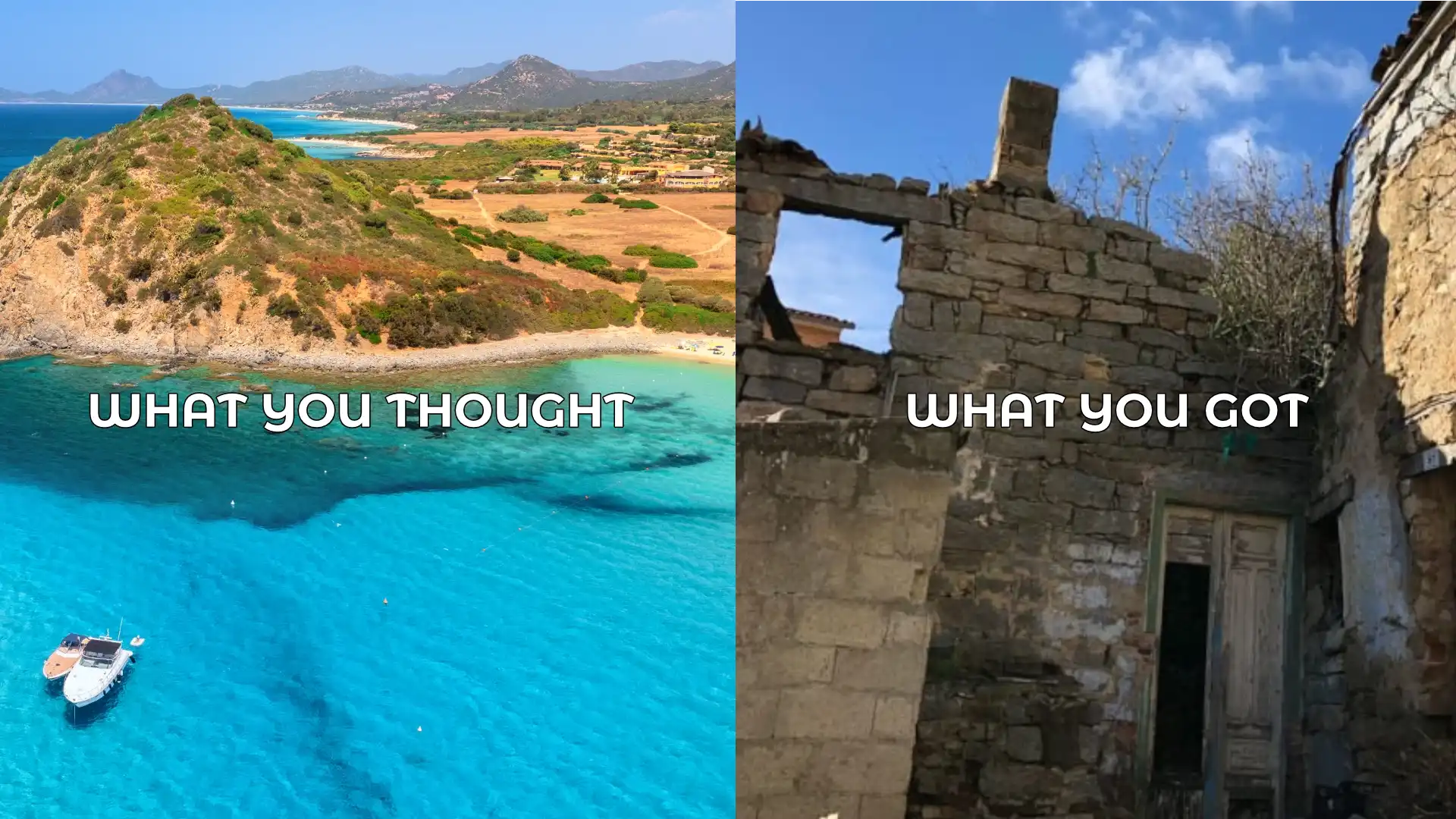
You may imagine purchasing a home near the beautiful beaches of Sardinia, but anything near those beaches is not being offered for 1 Euro. Instead, expect a dilapidated structure with near zero services up to two hours from that beach.
The Real Story: Why Towns Are Practically Giving Away Houses
Understanding why these programs exist reveals who they’re really designed to benefit. Italy has been grappling with the depopulation of its small villages for decades, particularly in rural and mountainous areas. This demographic crisis stems from urban migration, declining birth rates, and aging populations, leaving thousands of properties abandoned across the country.
The Municipal Strategy:
- Transfer expensive renovation and maintenance costs to private buyers
- Generate international publicity and tourism revenue
- Collect property taxes on improved properties
- Attract new residents without any municipal investment
- Preserve historic buildings without spending public funds
The initiative allows municipalities to achieve two goals: securing abandoned properties in historic centres and simultaneously repopulating these areas, breathing new life into the social and economic fabric of the region. As the mayor of Troina explained, the aim is “to repopulate and revitalise the historic center and create a cultural exchange, promoting the values of hospitality and enhancing the value of our territory in terms of tourism”.
It’s a sneaky but clever municipal strategy that shifts the financial burden from cash-strapped local governments to eager foreign buyers.
The Fine Print: It’s Never Actually Just 1 Euro
Before you even begin renovating, you’ll face a mountain of mandatory costs that can quickly add up to tens of thousands of euros:
Immediate Upfront Costs:
- Notary and legal fees: €2,000-€6,000
- Security deposit: €1,000-€10,000 (varies by municipality, refundable only after completion)
- Property taxes: Ongoing, regardless of the home’s condition
- Registration and deed fees: €500-€3,000
- Initial inspections and permits: €1,000-€3,000
Real buyers have reported the houses were sold for 1 euro each but also incurred a 500-euro realtors fee and 2,800-euro deed. That added up to a total of 3,301 euros (roughly $3,500) for each building. And that’s before any renovation work begins. (Italian Ministry of the Interior)
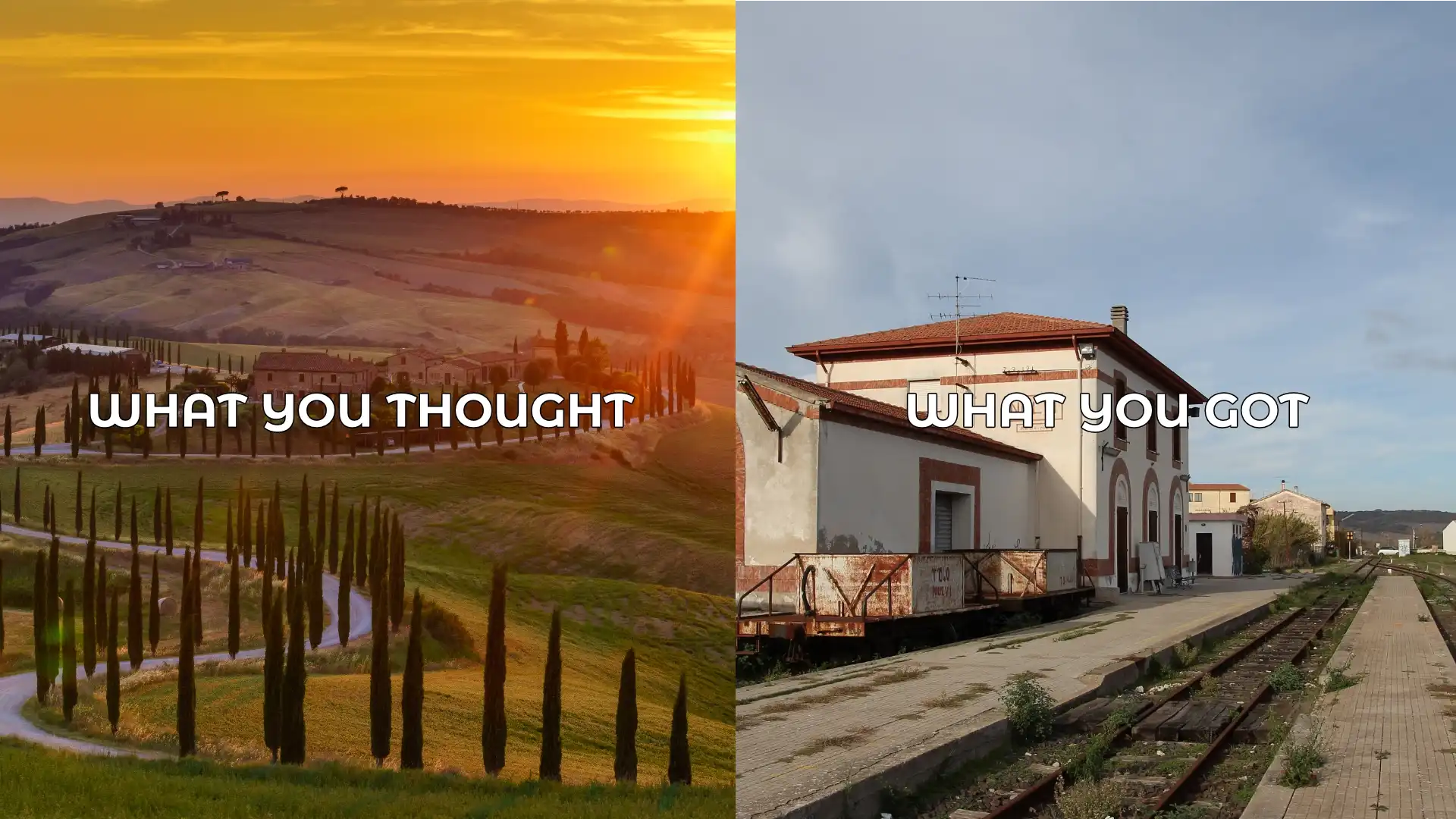
Maybe you imagine that home in Sicily will be a great base for travel, only to find you are in a near abandoned town hours from an airport that had train service leading to nowhere you want to go… ages ago.
The Renovation Reality: Prepare for Financial Shock
The “minimum €20,000 renovation” figure commonly cited is wildly unrealistic. Here’s what buyers actually spend:
Real-World Renovation Costs:
- Minimum realistic budget: €50,000-€100,000 for basic habitability
- Typical total investment: €100,000-€300,000+
- Major renovation projects: €400,000-€500,000+
One Chicago buyer initially budgeted 40,000 euros to renovate 620 square feet, but that grew to 140,000 euros to cover 2,700 square feet. Another buyer in California set an initial renovation budget of $20,000 and has so far spent $35,000, with the project still ongoing with no end in sight.
Renovation costs can sometimes spiral far beyond initial estimates, with some buyers reportedly investing up to €300,000 in seemingly simple renovations.
Why do costs spiral so dramatically? You’re not just updating a kitchen… you’re often rebuilding centuries-old stone structures that have been abandoned for decades, sometimes since earthquakes or simply left to decay.
The Contractor Nightmare: Limited Options, Inflated Prices
One of the most devastating hidden costs involves contractor requirements and pricing manipulation. Here are real examples of what buyers face:
Municipal Contractor Requirements
Monopoly Pricing in Action: In many 1-euro house programs, “the contract you sign DEMANDS that you give preference to local contractors. Since these towns are small, the number of contractors is small, so they can inflate the price since you don’t have much of a choice.”
Real Examples:
- Troina, Sicily: A mountain village at 1,120m altitude with limited road access. Finding contractors requires bringing them up winding mountain roads, adding transport costs and time
- Small Sardinian villages: In our village, “we have one architect and one builder.” While these particular professionals were described as “amazingly talented and honest,” this is the exception, not the rule
- Calabrian mountain towns: Many require you to hire locally, but as one buyer noted: “You do not get multiple bids like we do in America unless you are in a bigger city”
The “Foreigner Price” Reality
Contractor Exploitation: “The local Sicilian contractors know that you have to hit repair/reconstruction deadlines. You’ll definitely get charged the foreigner price.” This isn’t an accusation. It’s a frank admission from locals about how the system works.
No Competition, No Leverage: Since these towns are small, the number of contractors is small, so they can inflate the price since you don’t have much of a choice. You can’t shop around, can’t get competitive bids, and can’t negotiate from a position of strength.
Geographic and Logistical Nightmares
Transport and Access Issues: Most of the 1-euro houses in Italy are in small towns in remote areas, which means finding local contractors with the skills needed to undertake projects like this is often an impossibility. The result is that you often have to bring in a contractor from another bigger town, and that adds a lot to the cost of the project.
Seasonal Access Problems: Some of these villages also have no proper roads leading to and from the cities where the contractors are located. It is also not uncommon that during winter, some of these villages that are located on higher plateaus, have their access blocked by heavy snowfall.
Real Example – Troina: During winter a few years ago, they had so much snowfall that the city access was blocked and the mayor asked for help from the Italian army. Try getting renovation materials and contractors up there during winter months.
The “Domani, Domani” Schedule Reality
Italian Contractor Culture: As a local explained: “Assuming you get all that done, you’ll be hard-pressed to find contractors to work on the place – because it’s likely to be remote. Even if you do, the stereotype of ‘Domani, domani!’ (Tomorrow, tomorrow!) Is very much true. Nothing ever gets done on a schedule. Ever. Everything can wait until tomorrow.”
This ‘domani, domani’ mentality is a real aspect of Italian culture that affects everything from restaurant service to major construction projects.
Renovation Timeline Reality:
- Expected timeline: 6 months to 1 year
- Actual timeline: “Years, not months” according to multiple buyers
- Contractor availability: Often limited to specific seasons due to weather and access
- Multiple project conflicts: When towns become “inundated with renovations simultaneously,” the few contractors get overwhelmed
The Skills and Quality Problem
Many contractors in these remote villages lack experience with:
- Modern building standards required by permits
- Historical preservation requirements
- Working with foreign clients who don’t speak Italian
- International building codes and expectations
The result? Cost overruns, delays, and work that doesn’t meet expectations… all while you’re locked into using these specific contractors due to municipal requirements.
The Permit Nightmare: Where Dreams Go to Die
Let’s get specific about what “getting permits” actually means in practice:
The Bureaucratic Reality
Italy’s Bureaucratic Reputation: A local explained the reality: “Italy has the most red tape to get ANYTHING done coming in second only to Greece; the inventors of bureaucracy. You’ll be waiting in governmental offices for weeks or months to get approvals on the smallest things.”
Historical Property Complications: Many of these houses are historical houses, so you might need a lot of permits to renovate them. Since most 1-euro houses are in historic centers, you’re dealing with:
- Cultural heritage restrictions: Properties may be considered historically and artistically important and are therefore protected from major alterations
- Architectural preservation requirements: You must restore “in keeping with local architectural standards”
- Multiple approval layers: Municipal, regional, and sometimes national oversight
The Multi-Permit Maze
Required Permits Include:
- CILA (Comunicazione Inizio Lavori Asseverata): For minor modifications, still requires professional certification
- Building permits: For major structural work
- Historic preservation approvals: For properties in historic centers
- Utility connection permits: For water, electricity, gas, internet
- Occupancy permits: Before you can actually live there
Timeline Reality:
- Official timelines: 30-90 days for basic permits
- Actual timelines: Weeks to months for even simple approvals
- Complex renovation permits: Can take 6+ months
- Appeals and revisions: Add additional months to the process
Official permit requirements are detailed on the Italian Ministry of Economic Development website
Language and Cultural Barriers
The Communication Problem:
- All paperwork in Italian: No translation assistance provided
- Technical terminology: Building and legal terms that even fluent Italian speakers struggle with
- Local customs: Each municipality has its own interpretation of national laws
- Office hours and procedures: Italian bureaucracy operates on Italian time
Professional Requirements: Most municipalities require a detailed renovation plan to be submitted. This plan must be approved before any work can begin. You’ll need:
- Italian-licensed architect: To create acceptable plans
- Italian-licensed engineers: For structural assessments
- Local legal assistance: To navigate municipal requirements
- Professional translations: Of all documents and communications
The Deadline Trap
Permit Delays vs. Renovation Deadlines: Here’s the catch-22: You must “begin renovation work within 2 months of obtaining permits,” but permits can take 6+ months to get. Meanwhile, your 3-year renovation deadline clock is already ticking from your purchase date.
Real Consequences: All these obstacles, both natural and bureaucratic, result in many 1-euro house buyers missing their deadlines.
Penalty Examples:
- Pratola Peligna: €10,000 fine if you don’t register a detailed work plan within six months
- General penalties: €20,000 fines for missing renovation deadlines
- Property forfeiture: Some municipalities reclaim the property entirely
- Deposit loss: Forfeit €2,000-€10,000 security deposits
The Professional Services Cascade
Required Professional Help:
- Italian architect: €3,000-€8,000 for renovation plans
- Legal services: €2,000-€5,000 for permit navigation
- Engineering consultations: €1,000-€3,000 for structural assessments
- Translation services: €500-€2,000 for document translation
- Municipal expediter: Informal but often necessary €1,000-€3,000
Total Professional Costs Before Construction: €7,500-€21,000
This is why many buyers report that by the time they actually start renovation work, they’ve already invested €20,000-€30,000 just in permits, deposits, and professional services… before a single stone is moved.
You can find qualified notaries through the Italian National Council of Notaries and locate licensed architects via the National Council of Architects
The Strings Attached: More Than You Bargained For
Rigid Legal Obligations
Buying a 1 Euro home isn’t just a real estate transaction, it’s signing up for a legally binding renovation contract with strict terms:
- Renovation plans must be submitted within 2-6 months of purchase
- Complete renovations within 3-5 years (non-negotiable)
- Use approved local contractors and materials in many cases
- Restore in keeping with local architectural standards (expensive historical requirements)
- Establish residency and live there for minimum 3-5 years
- Cannot resell for profit in many municipalities
Finally, there is a period of two months to begin the renovation work once the new owner has obtained the permits. If you don’t comply with all requirements, if the new owner does not fulfil their obligations, they have to pay a fine of around 20,000 euros.
What You’re Actually Buying: A Ruin, Not a Home
Structural Nightmares Await
Your new “dream home” may have been condemned after an earthquake and will have to be torn down completely. Or, even if it is not condemned, it may still have been badly damaged or lie in a high-risk earthquake area, preventing you from insuring your home once it is built.
Common Property Conditions:
- Centuries-old stone structures with failing foundations
- No modern electrical, plumbing, or heating systems
- Structural damage from decades of abandonment
- Roofs that need complete replacement
- Walls requiring structural reinforcement
- Earthquake damage requiring specialized repair
Most homes require major repairs, so the cost is difficult to estimate. Some program participants spent several thousand euros on restorations, while others spent several hundred thousand euros.
The Location Reality Check: Remote and Dying Villages
Let’s get specific about what “charming Italian village” actually means in practice:
Ollolai, Sardinia: Sure, a 1 Euro home in beautiful Sardinia sounds amazing. Did we mention Ollolai is in the mountainous interior, over an hour’s drive from any beach? This village of just 1,170 inhabitants is so remote that the municipality had to launch a “Work from Ollolai” program just to get people to visit for a month, offering €1 monthly rentals to digital nomads willing to teach locals about modern work.
This isolation becomes clear when you understand the difference between Italy’s tourist destinations and authentic village life. Our guests often assume all Italian villages offer the same charm and accessibility.
Nulvi, Sardinia: Marketed as “15 minutes from the sea,” but that’s a misleading 30-45 minute drive to Castelsardo and Marina di Sorso, and only if you have a car and can navigate mountain roads. The village has been hemorrhaging residents for decades.
Troina, Sicily: This one takes the cake. Located at 1,120 meters altitude in the Nebrodi mountains, it’s literally called the “Balcony of Sicily” because it’s so high up and isolated. During winter, heavy snowfall has blocked access so completely that the mayor had to call in the Italian army for help. The ancient district is 500 meters away from the “newer, more populated areas”, and even those areas are dying out.
Understanding Italian seasonal realities is crucial – what’s beautiful in summer can be completely inaccessible in winter, affecting everything from construction to daily living.
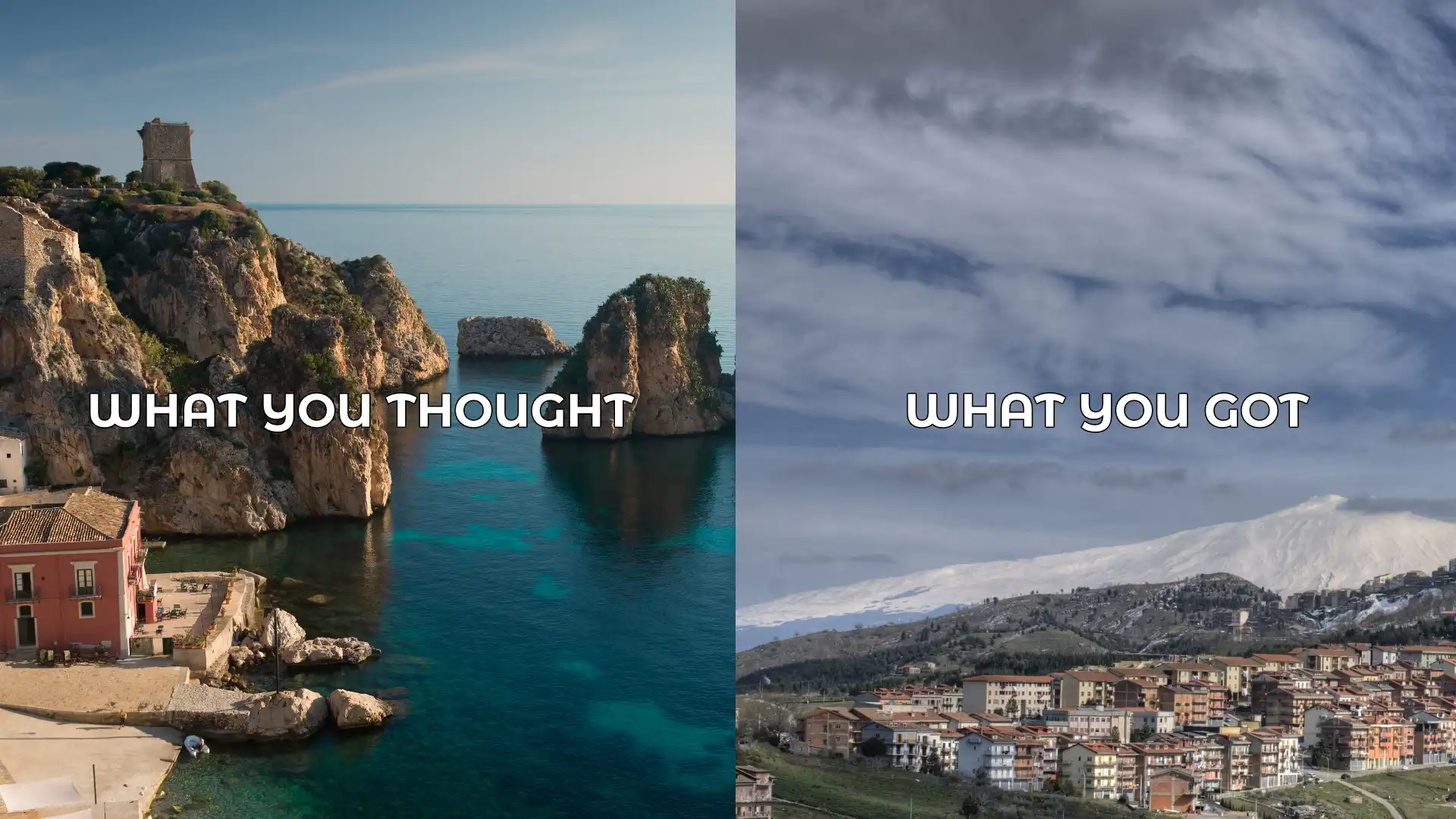
Perhaps you pictured yourself on the Sicilian shores, only to find your new home is in remote mountains of Sicily, far from everything, and you are shoveling snow.
Infrastructure Reality Check:
- Internet: Many areas have unreliable connectivity. When Italy’s soccer team made it to the UEFA European Championship final, much of one town had to gather in the piazza to watch on a bedsheet hung from a laptop because internet was so poor
- Transportation: Limited or no public transportation – you absolutely need a car
- Healthcare: As one nurse explains, she has to travel an hour to the village of Rosello just to find work
- Utilities: “Another issue to consider is the availability of Internet, gas, electricity and water. Even if you manage to get your house restored, you need all those things to live in it, but if there are no other people (or a handful of them) living there, you might not be able to connect these services”
- Employment: Essentially non-existent. As noted: “Loggers, farmers, and bus drivers make enough to live on in these villages, but these are the only occupations available”
- Services: Minimal shopping, restaurants, and basic services
The Geographic Isolation Problem: Most of these villages are located in areas with:
- No proper roads leading to cities where contractors are located
- High mountain locations that get snowed in during winter
- Crumbling infrastructure that local governments can’t afford to maintain
- Schools and businesses closing as populations fall below sustainability
But to live in the places that need the most help, such as these villages, è una vita dura – it is a difficult life. The villages that haven’t reinvented themselves and drawn people to them are, in fact, dying out.
Like many aspects of Italian culture, the reality differs significantly from American expectations – much like Italian food misconceptions or how Italians actually judge visitors.
The Real Math: What It Actually Costs
Let’s break down what buyers actually spend, with real examples:
Conservative Scenario (Smallest, Best-Condition Properties)
Upfront Costs:
- Purchase and legal fees: €3,000-€6,000 (like the €3,301 euros for each building including realtors fee and deed in Mussomeli)
- Security deposit: €5,000 (refundable only after completion)
- Permits and professional services: €7,500-€15,000
- Initial utility connections: €2,000-€5,000
- Total before renovation: €17,500-€31,000
Minimum Renovation Costs:
- Basic structural work: €40,000-€60,000
- Utilities installation: €8,000-€15,000
- Interior finishing: €15,000-€25,000
- Contractor markup/foreigner price: +25-50% additional
- Minimum realistic renovation: €80,000-€130,000
Conservative Total: €100,000-€160,000
Real-World Examples (What Actually Happens)
Meredith Tabbone, Chicago → Sambuca di Sicilia:
- Initial bid: €5,555 + fees = €5,900 for first property
- Additional property: €22,000 (bought adjacent building)
- Initial renovation budget: €40,000 for 620 sq ft
- Actual renovation cost: €140,000 for 2,700 sq ft
- Total investment: €168,000+
Rubia Daniels, California → Mussomeli, Sicily:
- Three properties: €3,301 each = €9,903 total
- Initial renovation budget: $20,000 (€18,500)
- Actual renovation spent so far: $35,000 (€32,500)
- Current total: €42,000+ (and still renovating)
Typical Escalation Pattern:
- Start with budget: €20,000-€40,000 renovation
- Reality check after permits: €60,000-€100,000
- Final actual cost: €100,000-€300,000+
- Some buyers reportedly investing: €400,000-€500,000+
The Hidden Cost Multipliers
Why Costs Spiral:
- Contractor monopoly pricing: 25-50% markup for foreigners
- Remote location surcharges: Extra transport and logistics costs
- Historical building requirements: Expensive specialized materials and techniques
- Structural surprises: “Things turn up when moving walls or fixing plumbing, especially in an ancient village”
- Permit delays: Carrying costs while waiting for approvals
- Currency fluctuations: For foreign buyers
- Living expenses: Accommodation during renovation oversight
Opportunity Cost Analysis
What €150,000-€300,000 Could Buy Instead:
Tuscany:
- Lucca area: Properties 20-25% lower than Florence prices
- Bagni di Lucca/Barga: Spectacular mountain views, authentic villages, more space
- Move-in ready apartments: €120,000-€200,000
Sardinia:
- Lake Trasimeno, Umbria: 30-40% lower than northern lakes
- Small townhouses: Around €150,000
- Villas with pools: €400,000-€500,000
Southern Italy:
- Abruzzo, Calabria, Puglia: “Charming villas under €250,000 that offer traditional character and beautiful surroundings”
- Renovated homes: Under €300,000 with modern amenities
- Coastal properties: In established communities with infrastructure
The Bottom Line Math: For the total investment of a 1-euro house project (€150,000-€400,000+), you could buy:
- A beautiful, move-in ready property in an established Italian town
- A property with actual infrastructure, services, and community
- Multiple properties for investment diversification
- A property you could actually resell easily
Since you don’t get that money back until after renovations are complete, you need a total of 40,000 Euros (or $45,000) on hand to buy a $1 home in Italy. And that’s just the minimum upfront requirement. The real total ends up being 5-10 times higher.
? Want to Experience Before You Buy?
Many of our Italy tour guests initially contacted us while researching property purchases. After experiencing authentic Italian village life through our immersive experiences, most realized they preferred visiting these places rather than living in them. Explore our Italy experiences
The Media Hype vs. Bidding War Reality
As covered by CNN Travel and BBC, the publicity machine around these programs has created serious problems for buyers:
The Celebrity Effect
TV Show Impact: There have been several popular and realistic projects on British and American television where celebrities purchased an old house for 1 Euro and renovated it themselves. One such amazing show about €1 houses in Tuscany was filmed in Fornovolasco, starring Amanda Holden and Alan Carr, and aired on the BBC in January 2024.
The Bidding War Result: Cities with 1 Euro offers that have been featured on YouTube or in television shows means that thousands of applications and eager buyers are flooding these cities to purchase a 1 Euro house. This creates a frenzy, and in practice, it leads to the following: Participants start competing with each other, offering higher prices, and instead of spending 10 Euros for a ruin, they end up spending 3000-6000 Euros.
Real Auction Prices
What People Actually Pay: The publicity has created bidding wars where the “1 Euro” starting price becomes meaningless. We conducted a small investigation to find out how much participants who applied to participate in the “1 Euro House” auction actually paid to own these houses. It’s no secret that 1 Euro is just the starting price. Afterward, people submit their offers.
Sambuca di Sicilia Example: Of the 100,000 people who sent emails interested in homes in Sambuca, 30,000 also visited the village. This massive interest drove up prices dramatically, with winning bids often reaching €5,000-€6,000+ for properties that still required hundreds of thousands in renovation.
The Tourism vs. Reality Problem
Municipal Tourism Strategy: As one American buyer noted about her experience in Sambuca: “It made me wonder how much of this was just a tourism push.” The publicity generates millions of euros worth of free international marketing for these struggling villages.
The International Community Phenomenon: Villages like Mussomeli now have what they call an “international community” of folks from around the world… Koreans, Russians, Americans, Argentinians… who all bought one-euro houses. While this creates an interesting social dynamic, it also means you’re not necessarily integrating into authentic Italian village life. You’re joining an expat renovation community.
The Application Overload Problem
Municipal Overwhelm: Thousands of people simultaneously submit applications, send emails, and ask thousands of questions. Imagine one municipal employee who speaks only Italian and receives hundreds of questions in different languages every day. Do you think he will answer them? No! He takes them lightly and thinks something like: “Why are you asking if a U.S. citizen can buy a house for 1 euro? This is a well-known fact.”
Response Time Reality: Municipal offices become completely overwhelmed by international attention, leading to:
- Months-long delays in application responses
- Lost applications and documents
- Miscommunication about requirements and timelines
- Preference given to buyers who visit in person (expensive for international buyers)
The end result? The house still has the same problems; the only difference is that there’s been publicity, and buyers are paying hundreds of times more for the same product while dealing with overwhelmed municipal systems and intense competition.
Better Alternatives: Italy’s Buyer-Friendly Market
Here’s what most people don’t realize: The Southern Italian property market is very buyer-friendly, as the uncertainties of the pandemic and Brexit have caused many European vacationers to sell and hoard their cash. This has glutted the market with beautiful homes.
Real Example: Soriano nel Cimino vs. Remote 1 Euro Villages
Soriano nel Cimino, where Culture Discovery Vacations is based, exemplifies what connected Italian village life actually looks like – with medieval charm, authentic festivals, and modern accessibility.
Soriano nel Cimino Properties:
- Current prices: €833 per square meter (November 2024)
- Example property: €129,000 for a 115m² single family villa with 5+ rooms, 2 bathrooms, garage, terrace, garden, and pool
- Apartment options: €33,000-€66,000 for move-in ready units
Location and Connectivity:
- Just 1 hour from Rome by direct train (€6 ticket) or car
- Just 1 hour to the Rome Airports
- 1 hour to Assisi by car
- 2 hours to Florence by car or train
- Regular transportation: 26 trains daily to Rome, plus bus services
- Direct access to major cultural destinations like Orvieto, Perugia, Spoleto
Infrastructure Reality:
- Medieval historic center topped by a castle with actual residents and community
- 15 minutes from Italy’s A1 Autostrada & a major national rail line
- Real restaurants, shops, and services
- Reliable utilities and internet connectivity
- Healthcare and employment access via Viterbo or Rome
- Annual festivals and cultural events (famous Sagra delle Castagne chestnut festival)
Compare to Ollolai, Sardinia 1 Euro village:
- Mountain interior location, 1+ hours from any beach
- Population: 1,170 people (and declining)
- Limited services and employment
- Requires €150,000-€300,000 total investment for a liveable home
- Extremely limited resale market
Sources: Tecnocasa | Nomisma | Idealista | Casa.it | Immobiliare.it
The Construction Oversight Reality
Here’s a crucial point most 1 Euro house articles ignore: If you’re going to do construction on a home in Italy, you really better know someone that can take care of things for you if you are ever away.
Why This Matters:
- Italian construction culture operates on “relationship time,” not contract time
- Contractors may disappear for weeks without explanation
- Material deliveries can be delayed or misdirected
- Permit issues require immediate, in-person attention
- Quality control requires constant oversight
Remote Village Challenges:
- No local support network for foreign buyers
- Language barriers with all local professionals
- No established expat community to provide guidance
- Municipal offices with limited hours and responsiveness
Better-Connected Towns Advantage:
- Established expat communities who can provide support
- Local English-speaking professionals
- Better access to quality contractors and suppliers
- Municipal offices experienced with international buyers
This is why our small-group, family-centered approach to Italian experiences includes local support networks that most independent buyers lack.
What €150,000-€300,000 Actually Buys You
In Established Italian Towns:
- Tuscany (Lucca area): Properties 20-25% lower than Florence prices, with cultural amenities
- Umbria (Lake Trasimeno): 30-40% lower than northern lakes, townhouses around €150,000
- Le Marche: Properties for €1,388-€1,786 per square meter with 5.51% price growth
- Abruzzo, Calabria, Puglia: Charming villas under €250,000 with established communities
Current Market Conditions (2025):
- Average residential property prices in Italy: €2,110 per square meter
- Rental yields of 4.5% in Rome, approaching 5% in Florence
- Properties in regions like Marche available for €1,388-€1,786 per square meter
- International buyers account for over 12% of residential sales, creating established support networks
Who These Programs Really Benefit
The Municipalities Win Big
These programs successfully:
- Transfer all renovation costs and risks to private buyers
- Generate international publicity worth millions in tourism marketing
- Eliminate expensive property maintenance and liability
- Collect property taxes on improved properties
- Attract new residents without any municipal investment
- Preserve historic buildings at zero cost to taxpayers
Buyers Usually Lose
While the allure of buying and renovating a 1 Euro house in Italy may sound enticing, the harsh reality is a never-ending onslaught of challenges. From bureaucratic nightmares to hidden costs, structural nightmares, and cultural clashes, the journey is fraught with frustration and disappointment.
Common Buyer Outcomes:
- Total investment often exceeds €200,000-€400,000
- Years of bureaucratic delays and permit struggles
- Massive cost overruns due to limited contractor options
- Living in remote areas with limited amenities and employment
- Property that’s difficult to resell due to location and restrictions
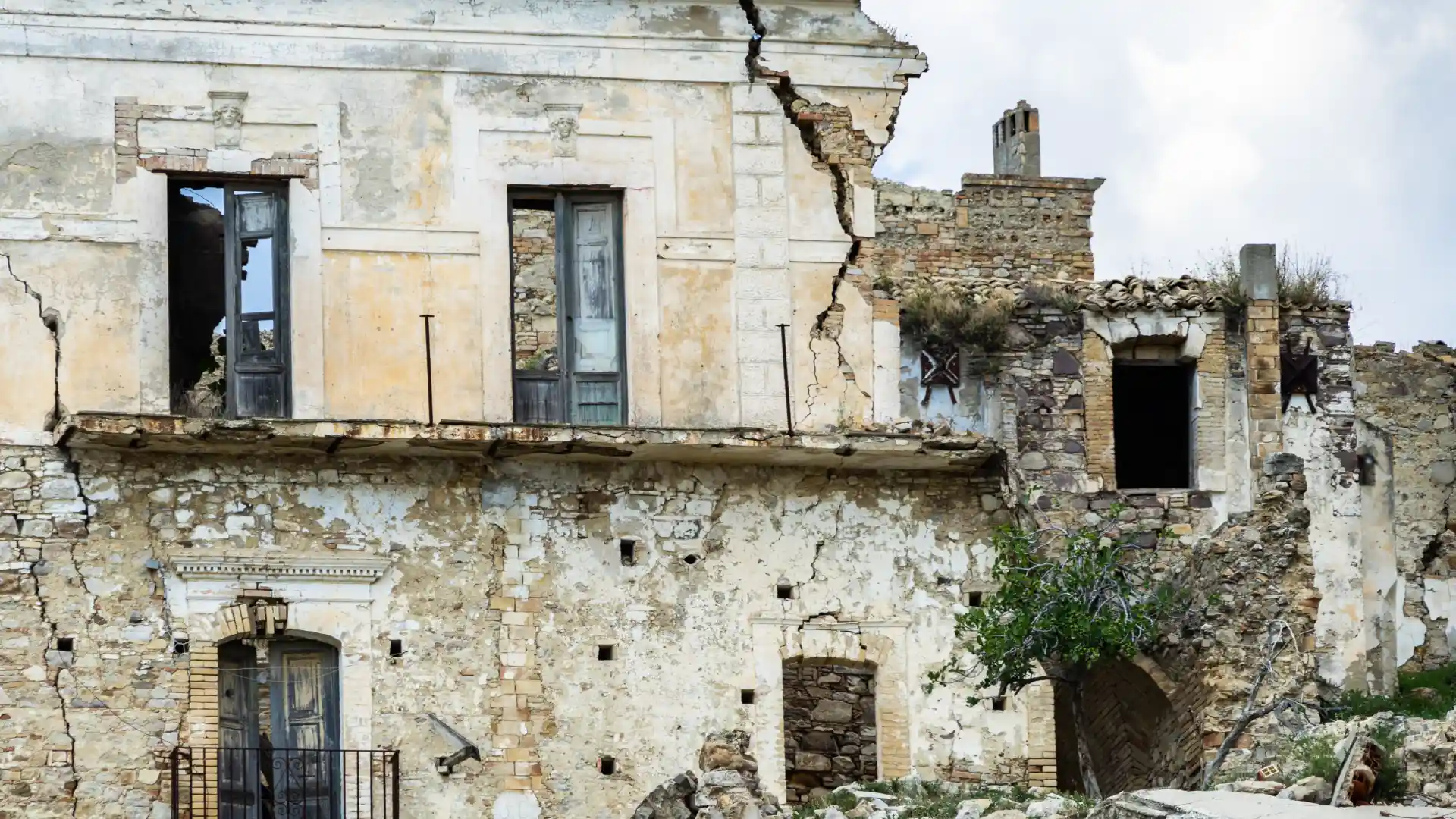
Most of these 1 Euro homes are so far gone that you could buy a breathtakingly restored home in a significantly more desirable area… for less.
The dream of Italian property ownership is absolutely achievable, but consider experiencing authentic Italian village life first through our immersive tours to understand what you’re really committing to.
The Bottom Line: Do the Math Before You Dream
Italy’s 1 Euro home programs aren’t scams, but they’re sophisticated municipal marketing strategies designed to transfer the burden of revitalizing abandoned properties to private buyers while generating valuable publicity for struggling towns.
The Hard Truth:
- The average total investment exceeds what you’d pay for a beautiful, move-in ready home in a desirable Italian location
- You’ll face contractor monopolies, bureaucratic nightmares, and strict legal obligations
- You’ll end up living in a remote, dying village with limited infrastructure and opportunities
- For the same money, you could buy a gorgeous property in established Italian towns with amenities, culture, and community
The Real Question: Why spend €200,000-€400,000 renovating a ruin in a remote village when you could buy a beautiful, ready-to-enjoy home in places like:
- Historic towns in Tuscany, Umbria or Alto Lazio with culture and amenities
- Coastal properties in established communities
- Lake district homes with stunning views and infrastructure
- City apartments in places like Bologna, Lucca, or smaller regional capitals like Viterbo
Before You Fall for the Headlines:
- Calculate the real total cost (usually €150,000-€400,000+)
- Research what else that money could buy in Italy’s current buyer-friendly market
- Consider whether you want to live in a dying village with limited amenities
- Factor in the stress, delays, and bureaucratic battles you’ll face
In most cases, you’ll find that the 1 Euro price tag is just very expensive marketing for what amounts to a property development project in one of Italy’s most challenging locations. The dream of Italian property ownership is absolutely achievable… just not through these programs that primarily benefit municipalities at buyers’ expense.
Frequently Asked Questions About Italy’s 1 Euro Houses
Are there better alternatives to 1 Euro houses in Italy?
Yes. For €150,000-€300,000 (typical 1 Euro house total cost), you can buy move-in ready homes in: Tuscany (Lucca area), Umbria (Lake Trasimeno), Abruzzo, Calabria, or Puglia with established communities, infrastructure, and better resale value.
How much do Italy’s 1 Euro homes actually cost?
Despite the 1 Euro starting price, buyers typically spend €150,000-€400,000 total. This includes upfront costs (€17,500-€31,000), renovation costs (€80,000-€300,000+), and professional services. Real buyers report spending €140,000+ on renovations alone.
What are the hidden costs of 1 Euro houses in Italy?
Hidden costs include: notary fees (€2,000-€6,000), security deposits (€1,000-€10,000), permits and professional services (€7,500-€21,000), contractor markups (25-50% foreigner surcharge), and penalty fees up to €20,000 for missing deadlines.
Are 1 Euro houses in Italy a scam?
No, they’re not scams, but they’re municipal marketing strategies that transfer renovation costs to buyers. The programs legally require extensive renovations within 3-5 years, often costing more than buying ready-to-move-in properties in better locations.
What condition are 1 Euro houses in Italy actually in?
Most are ruins requiring complete reconstruction. They typically have: failing foundations, no modern utilities, structural damage from abandonment, collapsed roofs, and potential earthquake damage. Many need to be torn down and rebuilt entirely
Where are Italy’s 1 Euro houses located?
They’re in remote, depopulating villages often hours from major cities or beaches. Examples include Troina, Sicily (1,120m altitude, snow-blocked in winter) and Ollolai, Sardinia (mountain interior, 1+ hours from coast). Many lack reliable internet, transportation, and basic services.
Can Americans buy 1 Euro houses in Italy?
Yes, Americans can participate in 1 Euro house programs. However, they face additional challenges including language barriers, unfamiliar legal systems, higher contractor costs due to ‘foreigner pricing,’ and difficulty overseeing renovations from abroad.
What are the renovation requirements for 1 Euro houses?
While buyers expect 6 months to 1 year, actual timelines are ‘years, not months.’ Delays come from permit processes (6+ months), limited contractor availability, seasonal access issues, and the Italian ‘domani, domani’ (tomorrow, tomorrow) work culture.
What permits are needed for 1 Euro house renovations?
Required permits include: CILA for minor work, building permits for major work, historic preservation approvals, utility connection permits, and occupancy permits. The process takes weeks to months, with all paperwork in Italian and requiring professional assistance.

Michael Kovnick is the Co-founder & CEO of Culture Discovery Vacations, the small-group cultural travel company he's run as a direct operator since 2006. An Italian-American who's spent 40+ years with one foot in The USA and the other in Italy, he built CDV around a simple, stubborn idea: keep the majority of every travel dollar in the local community, and treat guests like family instead of customers. He's a CTIE-certified travel professional, published in 2025 on the anti-extractive tourism model CDV is built on. He still writes here about the gap between how Americans and Italians see the world... and which side got it right.
[…] The prospect of finding the cheapest property in italy, including the famous 1 euro houses in italy, is a reality, but it comes with significant caveats and hidden costs. These schemes were created by local municipalities in depopulated villages to attract new residents and stimulate the local economy by renovating abandoned buildings. While the headline price is tempting, it’s crucial to understand that these homes are almost always in a state of complete disrepair. A report from Culture Discovery noted that most €1 houses require full reconstruction, with renovation costs com…. […]
[…] may lapse if deadlines are missed, requiring reapplication under new rules. Additionally, the hidden costs associated with permits and professional services can significantly impact the renovation budget. […]