
I first came to Italy in 1983 and moved here in 1985. Nineteen years old, straight out of The Valley.
There was no Facebook group. No welcome committee. No English-speaking realtor with a golf tan and a business card. Nobody handed me a list of “the American bars.” I found an apartment because a a friend of a friend knew a someone had a spare place, and that was the entire relocation industry available to me at the time.
Forty plus years later I’ve seen thousands of North Americans land here, and the pattern still hasn’t changed… which, honestly, it should have by now, right? Everywhere else on earth, when English speakers move somewhere warm and affordable, they build a bubble. Sun, cheap houses, a bar with a flag outside, a Sunday roast, somebody’s cousin selling real estate.
Italy is the one place they mostly don’t.
Here’s the boring math before I get into the why.
ISTAT, Italy’s national statistics agency, counted 17,650 U.S. citizens legally resident in Italy as of January 1, 2025. Up 6.7% year over year, so the trend is real, but the base is tiny. Canadians? Roughly 2,230.
Italy has 7,896 comuni. Municipalities. Towns.
Do the math. One resident Canadian for every three and a half Italian towns. You’re not building a curling club with those numbers, right?
Now look at Spain. Around 300,000 British residents nationally, with close to 99,000 registered in Alicante province alone. One province. Along that coast, per Spain’s national statistics institute INE, there are neighborhoods running about 44% British, and in Torrevieja 43.4% of registered residents were foreign-born as of 2022.
Mexico goes further. The 2017 count put roughly 899,000 U.S.-born residents in the country. San Miguel de Allende runs around 10% foreign out of a metro population near 175,000, and anybody who’s walked the centro will tell you it feels a lot higher.
OK, before I go any further, there are a few media articles that talk about a Little America in Italy. Let me put that in perspective: They are lifestyle pieced with something of a clickbait title. They refer to a tiny town in Sicily called Sambuca. It has sold a whopping 16 homes to Americans. You know, the 1 Euro home craze. Sixteen. Not Sixteen Hundred, Not Sixteen Thousand. Sixteen.
I digress…
So Britain built the Costa Blanca. America built San Miguel. And the entire American resident population of Italy would fit comfortably inside one minor American suburb.
But small numbers alone don’t explain it, though. Small numbers still cluster. Those 2,230 Canadians could absolutely all pile into one Tuscan hill town and open a Tim Hortons if they wanted.
They didn’t – (Thank God), and here are six reasons why.
1. They’re not chasing a bargain. They’re paying a premium, and the numbers prove it.
Read this part carefully, because there are many blogs that cite the romance of Italy as the reason. Well, yeah… there is that. But it is a little more complicated.
Nobody on the planet moves to Italy to stretch a pension. The financial case is really, really bad, and it is so on purpose.
Italy’s Elective Residency Visa requires roughly €31,000 a year in passive income for a single applicant, and North American consulates usually want well above that floor. Portugal’s D7, the direct competitor, sits at €920 a month in 2026. That’s €11,040 a year, indexed to the Portuguese minimum wage.
Italy’s barrier to entry is nearly three times Portugal’s.
And you’re paying more once you get here. The 2026 Your Overseas Home cost index put Spain at 32% below UK costs, Portugal at 29% below, and Italy at 25%. Cheapest to most expensive, in that order, and Italy loses.
Then look at where the Americans actually land. Rome. Milan. Florence. Tuscany has the highest American share of any Italian region’s foreign population at 0.60%. These are the most expensive property markets in the country, not the cheap ones.
Compare that to Spain, where about 40% of British residents are 65 or over, concentrated in coastal resort towns built for exactly that purpose. That’s a pension-stretching move. It’s a rational one! No shade.
Italy is not that move. Italy is people voluntarily clearing a higher financial hurdle to live somewhere more expensive.
And that tells us what they came for… the actual thing.
Sixty-one UNESCO World Heritage Sites as of July 2025, more than any other country on earth, ahead of China at 60 and Germany at 55. Twenty elements on the Intangible Cultural Heritage list. On December 10, 2025, UNESCO inscribed Italian cooking itself, describing it not as a set of recipes but as a communal activity built on intimacy with food and shared moments at the table. The Mediterranean diet got in back in 2010. The Neapolitan pizzaiuoli in 2017.
The passeggiata. The 7am espresso standing at the bar with four guys who’d notice if you didn’t show. The market on Friday. The fact that nobody eats at 5:30pm and nobody is going to start. The fact that three hours chatting at the table at that restaurant is normal and no servers are waiting to turn the table.
Nobody flies six thousand miles and pays a premium so they can find somewhere that shows the Sunday NFL games and sells a decent burger. If that were the goal, the goal is achievable in Ohio for a lot less money.
Then there is the actual structural part, the one that really matters: you cannot import an Italian lifestyle into a bubble. The Costa del Sol version of Britain works because British life is extremely portable. Pub, roast, football, chemist. Pack it, ship it, reassemble it in Fuengirola. Done.
The thing people move to Italy for just isn’t portable. It’s not a menu, it’s a schedule, and the schedule belongs to whatever town you are in. The bar opens when it opens. The shops close for pranzo whether you approve or not. The electrician will show up whenever he shows up. You either get in sync with the local rhythm or you don’t get the product at all.
A gated Anglophone version of Italy would be everything people paid extra to get away from.
So the bubble doesn’t form. Not because anybody’s virtuous, but because the bubble would defeat the purchase.
2. Italy’s retirement visa makes it illegal to build an expat economy
Back to that Elective Residency Visa. The income floor is one thing. But the terms of that visa are something more profound. You cannot work. At all. Not employment, not self-employment, not consulting, not freelancing, not remote work for a company back in Chicago. The prohibition is broad and it’s the actual intent. Italy grants residence to people who won’t touch the Italian labor market.
They really don’t want your better way of doing things. They don’t care about the efficiency you will bring the system or how your business ideas will improve the local economy.
Think that one through and sit with it for a moment. Look at everything it kills.
Every expat enclave on this planet was built by expats who work. The British bar in Benidorm. The American realtor in San Miguel. The English-speaking plumber, the immigration consultant, the guy running the classifieds newsletter, the woman who opened the bookshop, the accountant who understands both tax systems, the property management outfit, the shipping agent. Enclaves don’t get built by retirees sitting still. They get built by a parallel service economy that speaks your language and takes your money.
Italy’s flagship retiree visa legally forbids that entire class of business from existing.
So North Americans here don’t build parallel infrastructure. They can’t. They use the Italian one. Italian butcher, Italian doctor, Italian mechanic, Italian bar.
That’s not integration by virtue. It’s integration by having no alternatives.
And it works better, though. Way better!
In all fairness, some Americans can and do work here. Some build businesses. I am one of them. But I am married to an Italian. I have dual citizenship. I have been fully integrated for decades. And I have absolutely no desire to build a parallel economy. I love Italy exactly the way it is.
3. The tax code literally pays you to move away from other foreigners
In 2019 Italy introduced a 7% flat tax on all foreign-source income for newly resident foreign pensioners. Ten years of it. Article 24-ter of the Italian tax code.
The catch is geography. You have to move to one of eight southern regions (Abruzzo, Basilicata, Calabria, Campania, Molise, Puglia, Sardinia, Sicily) and into a town under a hard population cap. It started at 20,000. On April 7, 2026, Law 34/2026 pushed it to 30,000, which opened roughly 74 additional towns overnight.
Read that again, because it’s really strange.
Italy’s biggest financial incentive for foreigners is conditional on not living anywhere important. No Rome. No Florence. No Milan. No Naples city. Small towns in the deep south, or nothing.
Spain has no equivalent. Portugal’s old NHR regime had no geographic condition whatsoever, which is a big part of why the Algarve turned into what it turned into.
Italy went the other way and accidentally built an anti-cluster machine. The financial pull runs toward precisely the places with the fewest other Anglophones. A retired couple from Toronto optimizing their tax bill ends up in a Calabrian hill town of 6,000 where nobody has knowingly met a Canadian. Congratulations, you’re fully immersed. And it was a financial decision.
The ISTAT data’s already moving that way. Americans are still thin on the ground down south, but year over year the American population grew 28% in Basilicata, 26% in Sicily, 18% in Abruzzo. Tiny bases, sure. Still. That’s the direction.
4. Most of them aren’t moving to Italy. They’re moving to one specific village.
About 16.2 million Americans report Italian ancestry on the Census Bureau’s American Community Survey. In Canada it’s 1,546,390 people, or 4.3% of the entire country, per the 2021 census.
This is what makes Italy structurally different from every other destination on the list.
A Brit moving to Spain is buying a climate. A Californian moving to Portugal is buying a cost of living. Those are fungible decisions. Any sunny coast will work, right? So everybody picks the same three coasts, and a bubble condenses out of thin air.
An Italian-American isn’t buying Italy. They’re going to Sant’Angelo, because that’s where great-grandpa’s baptism record is. There’s exactly one of those, it’s on nobody’s top 1,000 list, and the nearest airport is two hours or more away.
The paperwork forces contact, as well. Citizenship by descent means dealing with the comune’s civil registry, the parish archives, a records clerk who may or may not answer the phone, and probably somebody’s cousin at the anagrafe. You’re inside the local bureaucracy from week one. You’ll know the mayor’s assistant by name before you know where to buy a lamp.
When I got my Italian citizenship, you would think I was applying for top secret clearance! First I planned on doing it by marriage, since my wife was born and raised here. The paperwork for that route was so huge that I was simply overwhelmed.
Then I accidentally found out that I had a right by descent. Turns out my grandfather was born here and never told a soul. That was the “easy” route, and it took 2 years, thousands of dollars, FBI background checks, a letter from LAPD, and everything short of my right arm… with the help of someone that does this for a living. And again, that was the easy way.
And even that door is narrowing. Decree-Law 36/2025, converted into Law 74/2025 and known as the Tajani Decree, capped automatic transmission at roughly a parent or grandparent born in Italy, ending the old unlimited-generation chain. Italy’s Constitutional Court upheld it on March 12, 2026. Foreign Minister Tajani’s stated reason was volume: Italian citizens resident abroad rose 40% between 2014 and 2024 and the consulates were drowning.
Fewer people will qualify going forward, and the ones who do are still headed to a village, not a coastline.
5. You can’t inflate a bubble in a country that doesn’t speak your language
The EF English Proficiency Index 2025 ranked Italy dead last in the European Union. Bottom of the whole union, sitting in the “moderate” band, with regional scores sliding into “low” in Puglia (498), Sardinia (491), and Calabria (482).
Which are… hang on, let me check the map… the exact regions the 7% tax break is pushing foreign retirees into!
Compare that to the Costa del Sol, where an entire English-language service economy exists because it can. Or the Algarve, which defaults to English before anybody asks.
In an Italian town of 8,000, English isn’t a fallback. It’s a party trick of sorts.
When I first came here, I was “The American” – In reality I was the foreigner. Wanna know how I learned Italian back then? Necessity. It I wanted to eat, I was gonna have to ask in Italian, period. I had no Internet, no satellite TV with multiple language programming, no expats. If I wanted any English, I could drive to a newsstand 20 minutes away that carried last week’s edition of Time magazine… once per week. 4 decades later it is easier, but not easy. Sure, more people speak English now. More, not many.
But wait! There’s more…
Then Italy makes it a legal requirement. Per Italy’s Ministry of the Interior, the EU long-term residence permit requires certified Italian at A2, and citizenship at B1 under Law 132/2018. There’s a real exam, three sessions a year, run by the University for Foreigners in Perugia or Siena, Roma Tre, or the Società Dante Alighieri.
What is A2? B1? A2 means you speak enough to really get by. Order the meal, ask for directions and understand them, make an appointment, or describe your family. B1 is closer. Not quite fluent, but close. Explain a problem to your landlord, have a full conversation about your work and future plans, follow the main points of a news report, and write a straightforward email.
In other words, you learn the language or you stay a permanent temporary person renewing a permit every year until you die. Nobody really cares when you tell them English is the international language.
No other major destination for North Americans puts that in your path.
6. A big share of them already lived here once
Italy is the single most popular study-abroad destination for American university students. Year after year. In 2023/24, the Institute of International Education’s Open Doors report counted 298,180 U.S. students studying abroad for credit, with Italy, Spain, the UK and France absorbing nearly half of them, and Italy on top.
So the pipeline feeding Italian residency is stacked with people who already did a semester in Bologna or Florence. Already butchered the language in front of a landlady. Already know what a codice fiscale is and roughly how long the wait at the questura is going to be.
They’re not arriving green at 55 and clinging to the first person in the arrivals hall who speaks English. They got that out of their system at 20.
But some clustering does exist…
I’m not going to pretend Americans are sprinkled evenly across Italy like parmigiano. They’re not, and anybody telling you otherwise hasn’t looked at the stats.
48.9% of American residents live in three regions: Lazio, Lombardy, Tuscany. Rome province alone holds 2,642. Milan 1,760. Florence 1,229.
But look at why, because it’s a completely different animal.
Rome has two U.S. embassies (one to Italy, one to the Vatican), the UN food agencies, pontifical universities, and a stack of long-established American campuses. Milan is finance and corporate transfers. Perugia (562) has the Università per Stranieri, one of the main schools in the country for foreigners studying Italian. Vicenza (500), Pordenone (268) and Catania (310) sit next to U.S. military bases, and those counts don’t even include active-duty personnel, who don’t register locally.
None of that is a lifestyle enclave. It’s institutional gravity. Trust me, nobody moved to Vicenza for the vibes.
And there is an important difference as well. Rome’s Americans are mostly embedded in Roman institutions, with Italian colleagues, Italian landlords, Italian bureaucratic nightmares, and many have Italian in-laws. Torrevieja’s Britons built a functioning replica of Britain with better weather and cheaper beer.
Residents vs. Visitors
There is a qualifier that I should point out that does skew the numbers. I have been talking about people that move their residency to Italy. There is a way to sort of get around the system to some extent, and I see many people doing it. Many people buy property here and only come on tourist visas. Those last 90 days, and then you must be out of the country for 90 days. So there are many people that buy property here, come on a tourist visa for 3 months, then leave for three months, and so on. Similarly, there are many people that have obtained Italian citizenship and do not need a visa, but maintain their residency outside the country. In those case, the rule is that they must be in Italy less than 183 days in any calendar year. Once you push past that, Italy considers you a resident no matter what you do or do not do.
So what’s actually going on
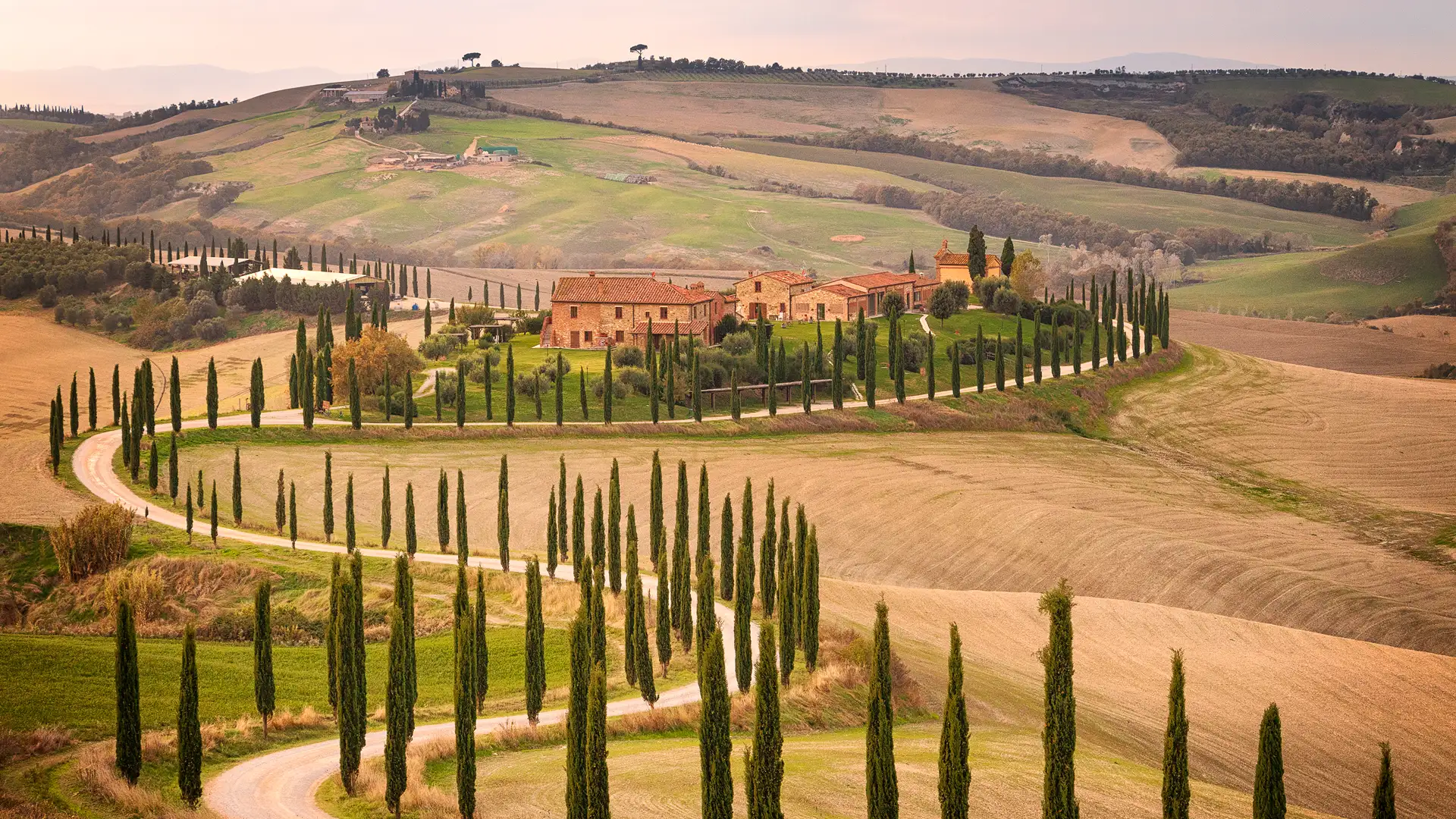
Strip out the romance of the villa in Tuscany with a row of Cypress and amazing wine, and here’s what’s left.
People come for something that can only be had locally, and they pay a premium for it. Then Italy makes the bubble pretty much impossible on top of that. The retirement visa outlaws the work that builds expat enclaves. The tax break rewards you for going where the other foreigners aren’t. The heritage pull sends you to one specific village instead of one popular hotspot. The language barrier is real, and it is legally enforced. And a big slice of arrivals already served their culture-shock apprenticeship on a study-abroad semester.
Six forces. Exactly one of them was designed to produce cultural immersion, and that one was an accident of what people wanted in the first place. The other five are visa law, tax law, genealogy, an English exam, and a study-abroad brochure.
All six push the same direction anyway.
I’ve spent most of my life between here and the U.S., and the thing I’d tell anybody considering the move is this: it doesn’t work because Italians are magically warmer than everyone else. Most of them will ignore you for a solid year. It works because Italy never gave you the option to hide, and because hiding was never the point.
Want a bubble? Go to Spain. You will love it.
But if you land in a town of 6,000 in Molise holding a tax break and there’s no English speaker for 40 miles in any direction, you’re going to be at somebody’s table for Sunday lunch inside a month. And it will not be because you’re brave or open-hearted or on some kind of journey.
It’s gonna be because there’s nowhere else to eat.
‘Nuff said.
Every figure in this piece links to its source. Residency counts are ISTAT data as of January 1, 2025 and cover only people registered with local authorities, so they exclude part-year residents, dual citizens, and active-duty US military personnel.

Michael Kovnick is the Co-founder & CEO of Culture Discovery Vacations, the small-group cultural travel company he's run as a direct operator since 2006. An Italian-American who's spent 40+ years with one foot in The USA and the other in Italy, he built CDV around a simple, stubborn idea: keep the majority of every travel dollar in the local community, and treat guests like family instead of customers. He's a CTIE-certified travel professional, published in 2025 on the anti-extractive tourism model CDV is built on. He still writes here about the gap between how Americans and Italians see the world... and which side got it right.