
Because “Croatian food” isn’t really one thing.
I get some version of this question every single time we bring a group through Croatia. “So what’s Croatian food actually like?” And every time, I have to stop them right there. Because the question doesn’t really have an answer. Not one answer, anyway.
Here’s the thing. Croatia is shaped like a boomerang wrapped around three or four completely different food cultures, and depending which end of the country you’re standing in, dinner tells a totally different story. Istria eats like it never quite left Venice. Dalmatia eats like the sea is doing most of the cooking. Slavonia, way out east, eats like Hungary crossed the border and lit a fire. And up around Zagreb, in the hills of Zagorje, they’d rather hand you coffee and cake and ask about your grandmother.
Five regions. Five different plates. Here’s the quick version before we go region by region.
| Region | Signature Dish | Historical Influence | Defining Ingredient |
|---|---|---|---|
| Istria | Fuži with truffles | Venetian / Italian | Truffles, Malvazija wine |
| Kvarner | Cres lamb, šurlice | Adriatic island tradition | Sage-grazed lamb, scampi |
| Dalmatia | Pašticada, peka | Mediterranean coastal | Olive oil, fresh seafood |
| Slavonia | Čobanac, kulen | Ottoman / Austro-Hungarian | Paprika, Graševina wine |
| Zagreb & Zagorje | Štrukli, purica s mlincima | Central European | Cottage cheese, mlinci pasta |
Now the long version.
Istria: Croatia’s Italy (Sort Of)
Istria is the heart-shaped peninsula up in the north Adriatic, and it’s the region most likely to make an Italian food snob go quiet for a second. Under Venetian rule for centuries, then Italian territory until after World War II, the place never really let go of that influence. It just folded it into something that’s its own now.
Truffles are the headliner. Istria pulls both white and black truffles out of the Motovun forest, and locals will argue, loudly, over wine, about whether theirs beat the ones from Alba just across the water. You’ll find them shaved over fuži, a hand-rolled pasta shape that’s basically unique to the region, or worked into a scrambled egg that costs more than it has any right to.
Then there’s pršut, the air-dried ham that’s Croatia’s answer to prosciutto, and Malvazija, a crisp, floral white wine that grows almost nowhere else the way it grows here. Throw in the olive oil, which has held EU Protected Designation of Origin status since 2019 and been ranked the best in the world by the Flos Olei guide nine years running, ahead of Tuscany and Puglia both, and you understand why some travel writers call this “Croatia’s Tuscany.” Lazy comparison. Also not wrong.
Kvarner: The Region Nobody Talks About
Sandwiched between Istria and Dalmatia, Kvarner gets skipped constantly. Which, honestly, works in its favor if you’re the kind of guest who wants the good stuff before everyone else finds it.
The lamb is the thing to know here. Sheep on the island of Cres graze on wild sage and salt-sprayed grass, and the meat picks up that flavor in a way you can actually taste. It’s just different from lamb anywhere else in the country. Pair it with šurlice, a hand-rolled pasta from the island of Krk, or a plate of scampi pulled out of the bay that same morning. Kvarner doesn’t shout about itself. It just quietly does a lot of what Dalmatia does, minus most of the tourists.
Dalmatia: Where the Sea Runs the Kitchen
This is the Croatia most people already picture. It is also where we focus most of our trips in Croatia. The long stretch of coast from Zadar down past Split to Dubrovnik, islands scattered across water that’s an amazing shade of blue, stone towns that look about the same as they did five hundred years ago.
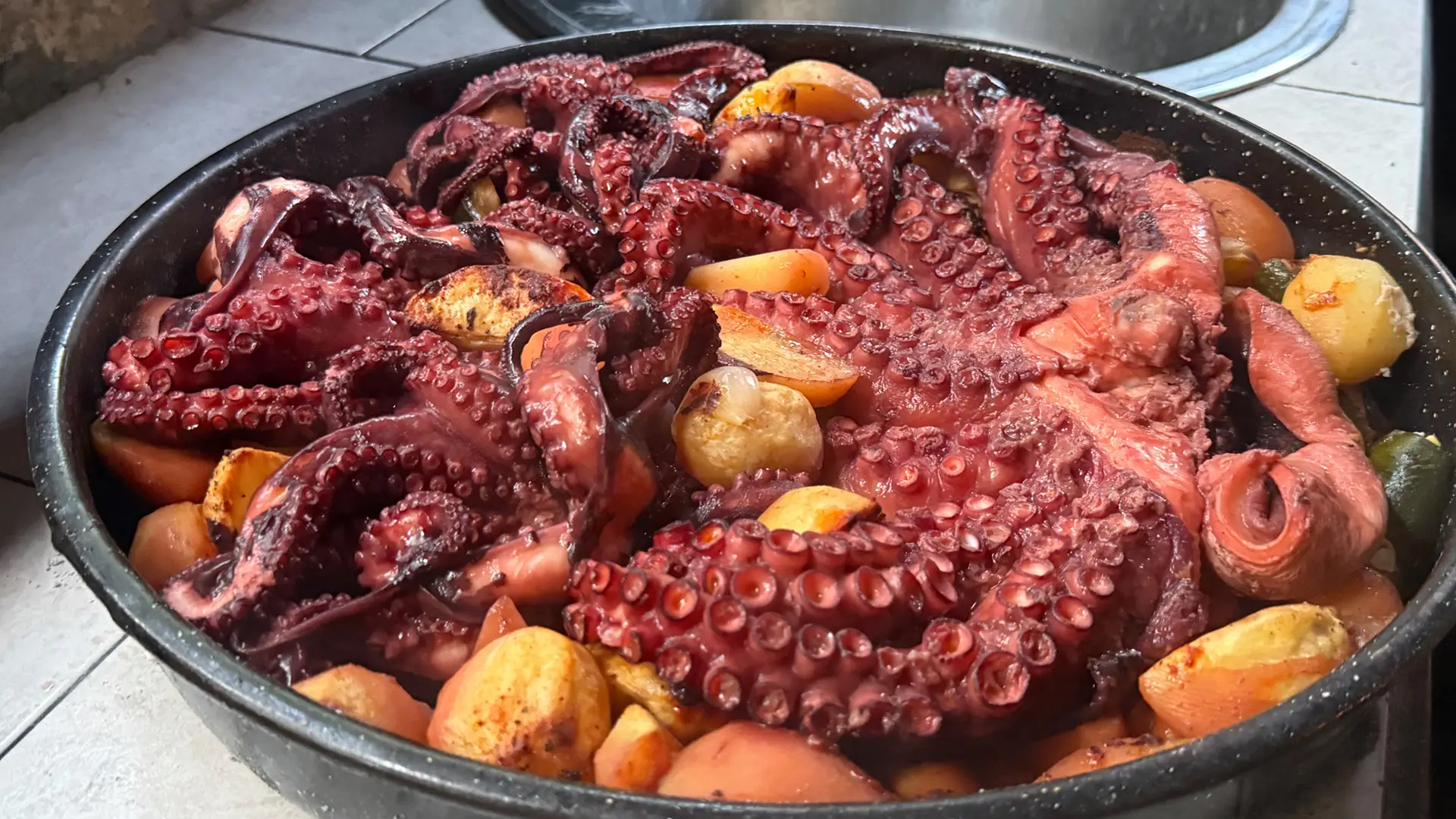
The food follows the coastline’s logic. Olive oil, garlic, rosemary, parsley, and whatever came out of the water that morning. That’s basically Dalmatian cooking in five ingredients. Buzara, shellfish simmered in wine, garlic, and tomato, shows up on every menu from Zadar to Korčula. Peka, meat or octopus slow-roasted under a metal dome buried in hot coals, takes hours and has to be ordered a day ahead, which is exactly why it tastes like it does. And pašticada, beef marinated for days and braised in wine with prunes, is the dish Dalmatian families still save for weddings.
In 2013, the islands of Hvar and Brač were named Croatia’s representative community on UNESCO’s list for the Mediterranean diet, one of only seven communities across the entire Mediterranean chosen for that recognition. That’s an international body looking at how people on two small Adriatic islands actually eat, and deciding it was something they want to protect.
Slavonia: The Spiciest Region, and the One Fewest Visitors Ever See
Head east past Zagreb, out toward the Hungarian and Serbian borders, and the whole conversation changes. This is Slavonia. It eats nothing like the coast.
Centuries under Ottoman and then Austro-Hungarian rule left their mark here, hard. Paprika runs the show, sweet, hot, smoked, all of it, piled into kulen, a cured pork sausage so tied to the region it’s held EU Protected Geographical Indication status since 2017, the same legal category used to lock down where a food is allowed to come from. Čobanac, a slow stew built from whatever meat’s on hand that day, simmers for hours over an open fire until it goes dark red and thick enough to stand a spoon up in. Fiš paprikaš, a river-fish stew made with catfish, carp, or pike pulled from the Drava and the Danube, gets its color from the same paprika running through everything else on the table.
Wash it down with Graševina, Croatia’s most planted white grape, grown almost entirely right here. If Istria is the region that reminds you of Italy, Slavonia is the one that reminds you nobody in this country eats bland on purpose.
Zagreb and Zagorje: The Quiet Continental Middle
Up in the hills north of Zagreb, Zagorje cooking runs gentler, closer to Vienna and Budapest than to anything Mediterranean. This is štrukli country. A rolled or baked cheese pastry that shows up savory at dinner and sweet at breakfast, sometimes both at the same meal, and nobody blinks.
Zagreb itself sits at the crossroads of everything, and its food shows it. Purica s mlincima, roast turkey with dried baked pasta sheets torn up and soaked in the drippings, is the dish for Sunday lunch and holidays, about the closest thing the country has to a shared, capital-city classic. Coffee culture runs deep here too, closer to a Viennese café than an Adriatic espresso stand. You sit. You stay a while. Nobody’s rushing you out.
So What Is Croatian Food, Actually?
Here’s my honest answer after running trips through this country: there isn’t one answer. There’s Croatia, and there are at least five distinct food cultures living inside its borders, shaped by whoever happened to be occupying, trading with, or fighting over each stretch of coast or plain over the last thousand years.
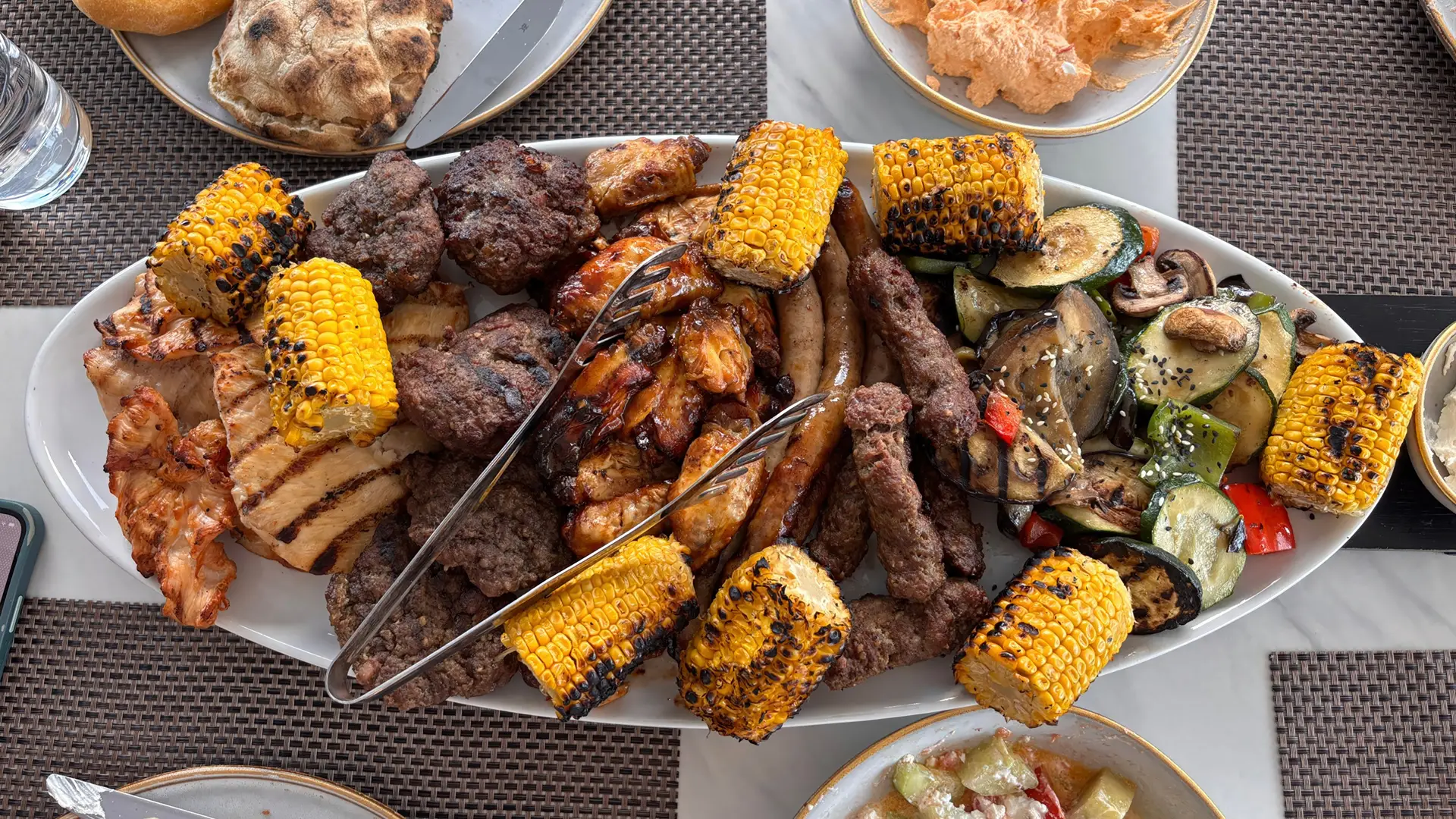
And then there is Cevapi! Technically not Croatian. It is Bosnian. But I will still never skip it!
None of this is a knock on the place. It’s the whole reason we love it. You can eat truffle pasta in Istria on a Tuesday and be spooning paprika-red stew in Slavonia by Friday, and it’ll feel like two different countries. Because in a lot of ways, it kind of is.
So next time someone tells you they “had Croatian food” on a quick stop in Dubrovnik… you can tell them, gently, that they had about one fifth of the story… and you are happy for them that they took that Game of Thrones tour.
Sources
- UNESCO, Mediterranean Diet: Brač and Hvar, Croatia
- European Commission, Implementing Regulation (EU) 2017/1992 registering “Slavonski kulen/Slavonski kulin” as a Protected Geographical Indication
- Croatia Week, “Istria Named World’s Best Olive Oil Region for Ninth Time,” Flos Olei 2026
Is there such a thing as “Croatian food”?
Not really, not as one cuisine. Croatia has at least five regional food cultures, shaped by centuries under Venice, the Austro-Hungarian Empire, and the Ottoman Empire. Coastal regions cook Mediterranean. Inland regions cook Central European. There’s no single dish that represents the whole country the way pasta represents Italy.
What is the national dish of Croatia?
Croatia has no official national dish, but sarma (cabbage leaves stuffed with minced meat and rice) comes closest. It’s one of the only dishes that shows up in some form across almost every region, even though it’s most associated with the continental, Ottoman-influenced parts of the country.
Is Croatian food similar to Italian food?
In Istria, yes, closely. Istria was Venetian territory for centuries and then Italian territory until after World War II, and dishes like fuži pasta and pršut ham reflect that history directly. Head south to Dalmatia or east to Slavonia and the resemblance drops off fast.
Is Croatian food spicy?
Depends entirely on where you are. Coastal cooking in Dalmatia and Istria isn’t spicy at all… it leans on olive oil, garlic, and herbs. Slavonia is the outlier, built around sweet and hot paprika in dishes like čobanac and kulen sausage, and it brings real heat.
What’s the difference between Dalmatian and Istrian food?
Both are coastal and Mediterranean, but Istria carries a heavier Italian influence (truffles, fuži pasta, Malvazija wine) from its Venetian history. Dalmatia leans harder into pure seafood and olive oil, with dishes like pašticada and peka. It’s a difference of degree more than direction.
Which Croatian region has the best food?
I’ll get in trouble for this one no matter what I say, so I’ll just say it. Istria wins on refinement, Dalmatia wins on setting, and Slavonia wins on flavor if you actually like your food to have a kick. Ask me again after I’ve been fed in all three in the same week and I might change my answer.

Michael Kovnick is the Co-founder & CEO of Culture Discovery Vacations, the small-group cultural travel company he's run as a direct operator since 2006. An Italian-American who's spent 40+ years with one foot in The USA and the other in Italy, he built CDV around a simple, stubborn idea: keep the majority of every travel dollar in the local community, and treat guests like family instead of customers. He's a CTIE-certified travel professional, published in 2025 on the anti-extractive tourism model CDV is built on. He still writes here about the gap between how Americans and Italians see the world... and which side got it right.