
I just got back from IMEX in Frankfurt.
If you don’t know it, IMEX is one of the big ones… the trade show where the meetings-and-incentives world gathers to talk shop. Corporate event planners. Incentive houses. The people who design the trips your company sends you on when you crush your sales number. Smart room. Serious money moving around.
And I sat through session after session listening to the same pitch, dressed up a dozen different ways:
“We need to learn how to create more authentic experiences. That’s what people are searching for.”
“We need to make guests feel like real connections are forming.”
“We need to appear like we care.”
Appear. Feel like. Make them think.
I’ve been doing this 20 years, and I’ve heard the exact same thing at consumer travel conferences the whole time. Different room, same script. Everybody wants to know the trick. The framework. The five steps to seeming authentic.
And I kept thinking the same thing in every one of those rooms.
You can’t.
Here’s the part nobody on that stage wants to say out loud
You cannot fake this. Not anymore… Seriously? Never.
People are not stupid. If you make something sound authentic, they can feel the gap between the sound and the thing. If you say you care, they’re already watching your hands, not your mouth. Because caring isn’t a plan you execute. It’s a behavior in your DNA. It shows up in what you do when it costs you something.
And the data backs this up in a way that should terrify half the companies in that conference hall.
A 2026 Emplifi survey found 93% of consumers say authentic brand engagement builds trust, and 85% will pay more for brands they see as authentic. Sounds like great news, right? Keep reading. More than half would stop buying after a single inauthentic experience, and one in three would go leave a negative review over it.
So the upside of real is huge. And the downside of fake is a knife.
It gets worse for the fakers. Today’s consumers can spot misleading content in seconds, and that kind of trust is brutally hard to win back. Seconds. Not a campaign cycle. Not after they’ve booked. Seconds.
The thing they’re actually asking
When a company says “teach us to seem like we care,” what they’re really asking is: how do we get the rewards of caring without paying for it?
That’s the whole game. They’ve seen the numbers. They know authentic wins. Per Booking.com’s 2025 research, 77% of travelers now seek out experiences that genuinely represent local culture, and 73% want their spending to actually go back into the local community. They’ve read the same reports I have. Industry data says nearly half of travelers will pay a premium for experiences with real cultural depth.
So they want in. But they want the cheap version.
And here’s why the cheap version doesn’t exist:
Authenticity isn’t a marketing layer you bolt on top. It’s not a tone of voice. It’s not a content strategy. It’s not a thing you learn at a conference in Frankfurt. It’s upstream of all of that. It’s who you already are before anybody’s watching.
You either are, or you’re not. You either do, or you don’t.
Not because a market study told you the segment is hot. Because it’s in your DNA, and you’d do it even if it were unprofitable.
Why we exist (and it’s not a brand story)
CDV didn’t start as a business idea looking for a market.
It started because my wife Paola and I watched the tourism machine treat people like cattle. Herd them off the bus. March them past the thing. Photo. Back on the bus. Extract the money. Send most of it to some corporate HQ a thousand miles from the place they just “experienced.” The guest gets a worse trip. The town gets the crowds and almost none of the cash.
We hated it. Plain and simple. So we built the opposite.
We don’t care about our guests because caring tests well in focus groups. We care because we are constitutionally incapable of not caring. It’s not a strategy. I truly don’t know how to run this any other way. We’ll lose a sale before we’ll host a wrong-fit guest, because putting the wrong person in the room wrecks the trip for everyone, including them… and us!
Not a tagline. It’s just any given day around here.
And it’s the whole reason most of what you spend stays in the towns you fall in love with. Over 70% of every dollar, in fact. That’s not a sustainability badge we bought. It’s just the math of refusing to use middlemen.
OK, so why don’t the big players just… change?
Here’s the honest answer. The one the consultants skip.
Because real costs money.
Keeping the money in the local economy instead of squeezing the vendor? Thinner margin. Capping a group at a size where actual human connection can happen instead of packing the bus? Fewer heads, less revenue per departure. Saying no to the guest who isn’t a fit? That’s a sale, walking out the door, on purpose.
Every single thing that makes an experience genuine costs the operator something. Time. Energy. And yeah… margin.
That’s the wall. That’s why the whole industry would rather pay a speaker to teach them to fake it than do the much harder, much more expensive work of being it. Faking it is a line item. Being it is a rebuild.
The detect-the-BS problem just makes the fake route a dead end. Research on influencer marketing found 80% of consumers name brands that aren’t genuine or transparent as the single biggest trust killer. So you spend the money to seem real, get caught in seconds, and torch the trust anyway. You paid for the costume and still lost.
A quick word on measuring this stuff
Now, on the B2B side, we actually built a platform that measures what a trip does to a team. Tracks it for up to 18 months. Board-ready report, the whole thing.
And you might think… wait, didn’t you just say caring can’t be measured or faked?
Here’s the distinction, and it matters. You can’t measure your way into authenticity. No dashboard makes a fake trip real. But when the substance is already there… when the relationships and the access and the care are real… you can absolutely measure what that produces. The cohesion. The retention. The change that’s still showing up a year later.
We didn’t build measurement to seem legit. We built it because we were tired of being the only ones who couldn’t prove what we already knew was happening. The proof comes after the real thing. Never instead of it.
The one question that actually matters
So to every company sitting in that Frankfurt conference center, scribbling notes on how to appear like they care, here’s the only question worth asking. Forget the frameworks.
Are you willing to profit less?
That’s it. That’s the whole thing. Not “can you learn authenticity.” You can’t learn it. The real question is whether you’re willing to pay for it… in margin, in scale, in sales you walk away from… when the spreadsheet is begging you not to.
If the answer is no, fine. Be honest about it. Run your bus tours and corporate events. Do your DMC-produced incentives and corporate retreats. Compete on thread count. But stop pretending. People can tell.
If the answer is yes… then you don’t need a conference. You already know what to do. You’re just choosing to do it. And if you’re a planner or an incentive house who actually wants to build the real thing with people who’ve done it for two decades, come talk to us.
We made that choice 20 years ago. We make it again every single day, every time we say no to something easy.
We’re still here. The repeat guests, the awards, the Hall of Fame, the Magellan gold are still here. Turns out, choosing to profit a little less is the best long-term investment we ever made.
You can’t learn to care.
But you can decide to.
Culture Discovery Vacations has spent 20 years building small-group cultural trips across Italy, Portugal, Croatia, Spain, and beyond… the kind where most of what you spend stays in the towns you fall in love with. That’s not our marketing angle. It’s the entire reason we exist.
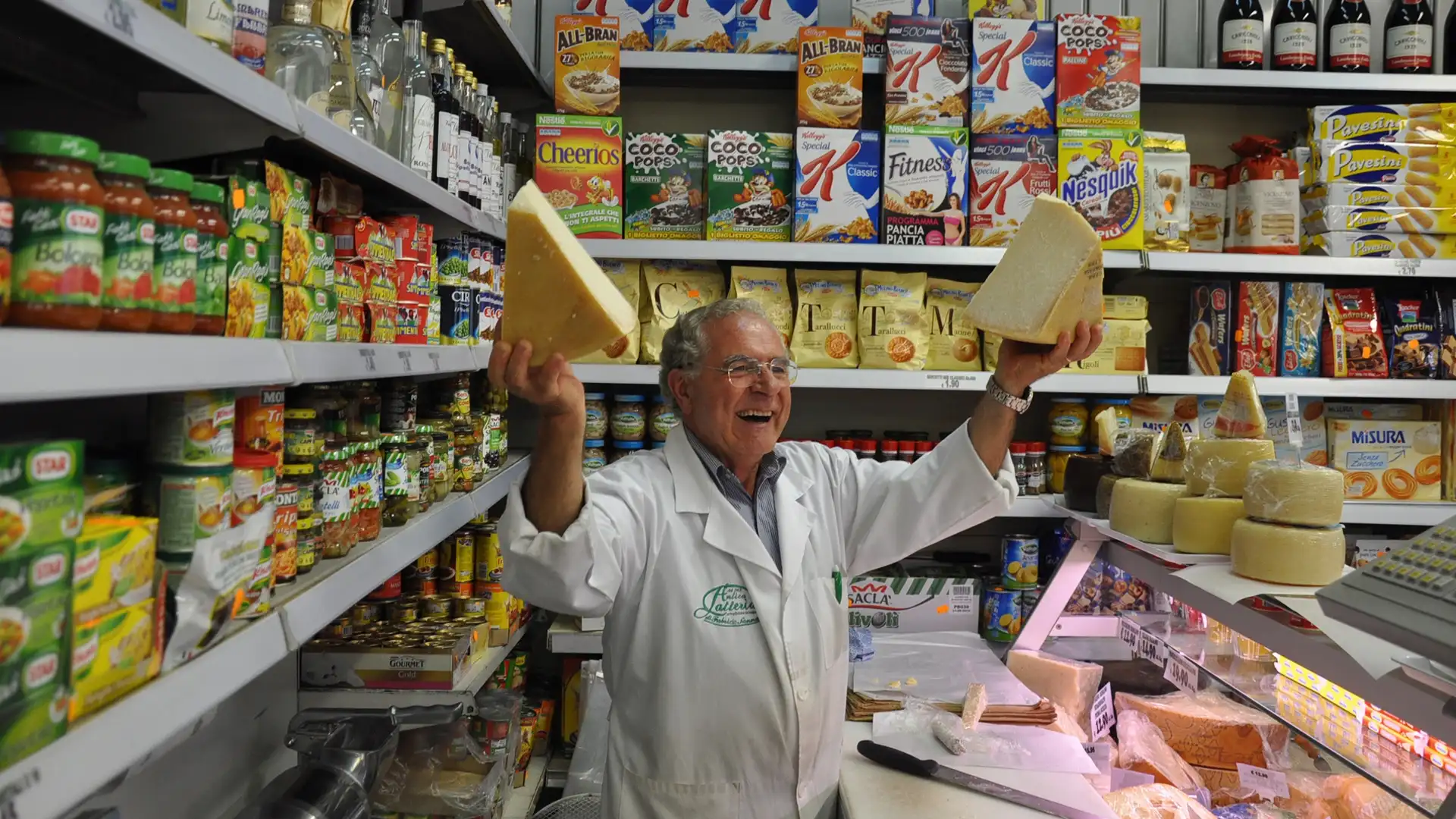

Michael Kovnick is the Co-founder & CEO of Culture Discovery Vacations, the small-group cultural travel company he's run as a direct operator since 2006. An Italian-American who's spent 40+ years with one foot in The USA and the other in Italy, he built CDV around a simple, stubborn idea: keep the majority of every travel dollar in the local community, and treat guests like family instead of customers. He's a CTIE-certified travel professional, published in 2025 on the anti-extractive tourism model CDV is built on. He still writes here about the gap between how Americans and Italians see the world... and which side got it right.
Loved this article. It was fascinating to get a glimpse into the inner workings of the industry. As an everyday traveler, I’d never really thought about everything that goes into high-level corporate marketing. I will say that the CDV experience we had in Amalfi was truly something special. We made friends there—friends we still stay in touch with today and have even planned future travel with, including another CDV program! We also remain connected with those who hosted us. You are a very special organization, and I want to thank you for all that you do. Hopefully, I’ll see you… Read more »
Thank you soooo much, and yes! Paola and I will be on one of the Argentina and Uruguay trips in 2027 🙂 (I will be th pone eating all that steak!)
Extremely well said and exactly why my husband and I have gone on two CDV trips and are encouraging our friends to join us on a third!
Aweeee, thank you Carol 🙂
Really enjoyed your article and am loving the thought of immersing myself in an authentic Italian culture being Italian American decent I have been to Italy about 8 times both on self planned trips and tours. The latter not being very enjoyable Too many hotel changes bus rides and travelers. A small intimate group is what I prefer. Hoping you and Paola will be joining the Oct 17,2026 olive harvest in Soriano. Let me know if you both will be there
Hi Susann :-). Thank you so much! You will LOVE Soriano! And we won’t be here when you arrive, but will get home a couple days in. We will be at the launch in Catalonia, and get home Sunday afternoon. I for sure will see you Tuesday!