

By Michael Kovnick, Founder • Updated November 28, 2026
Culinary Spain, for us, means one corner of the country and one family's table. Our culinary tour of Spain is 8 days and 7 nights in Catalonia, with 16 guests at most. You make sweet Mistela with an 8th-generation winemaker, cook with chef Bet in her small restaurant, and go cellar to cellar in Priorat.
Home all week is Hotel Núria, a family-run hotel by the sea in Tarragona. All 21 meals are in one price, with wine and vermouth at lunch and dinner. So are a day in Barcelona, the oyster farms of the Ebro Delta and a night learning to build human towers in Valls. For 2027, Catalonia is our one Spain trip.
2026 Travel Weekly Magellan Gold Award: Best Tour Operator, Overall · 2025 Magellan Gold, Best Service · Tripadvisor Hall of Fame
Most people meet Spain at a tapas bar. A plate of croquetas, a glass of red, a loud happy room. It's a great night. But it's one night, and you go home without knowing a single person in that room.
We wanted more for our guests. We wanted to know who grows the grapes and who bakes the bread. We wanted to see what a family cooks on a Sunday when no tourist is watching. So for our culinary tour of Spain, we went looking for a family first and a place second.
We found Manye's. His family has lived in Vilabella, a village of 700 people, for more than 250 years. Their cellar, El Celler de l'Apotecari, has roots that go back to 1776. Manye and his partner Marta guide our week. Their friends cook for us. And on the last night, the whole family throws a party at the home of Manye's fourth uncle.
Still planning the bigger picture? Our Spain vacation packages page and our Spain travel guides have the rest.
What Culinary Spain Means, Region by Region
Spain is big, and every region eats its own way. Here's a quick, fair look at the four places people ask us about most.
The Basque Country
Pintxos and Rioja. San Sebastián is one of the best places to eat in all of Europe. Small bites on bread line the bars of the old town, and you point at what you want. Rioja's vineyards sit a short drive south. Come hungry, and plan to eat standing up.
Andalusia
Flamenco, the Alhambra and the tapas bars of Seville. The south has deep history and the hottest summers in Spain. It's the home of cold gazpacho, which makes sense the first time you feel July there. Go in spring or fall.
Madrid
A big city that eats late. Dinner often starts around 10 PM, and a night out is a walk from one bar to the next. The Prado is here, and Toledo and Segovia are easy day trips by train.
Catalonia
Sea, rice and wine. The coast gives you oysters, mussels and paella made with rice from the Ebro Delta. Inland, terraced hills grow the grapes for Priorat, one of the great wines of Spain. And people hold on to old ways, from human towers to a sweet wine called Mistela.
Which region fits you best? We wrote a whole guide on which region of Spain fits you.
Why Our Culinary Tour of Spain Lives in Catalonia
A coach tour can show you five cities in a week. It can't sit you down at a family's table. We wanted the table, so we picked one region and went deep.
Catalonia gave us all of it within easy reach. The sea and the Roman town at Tarragona. Barcelona, an hour up the coast by train. Real wine country inland, from Vilabella to the steep vines of Priorat. And the rice fields and oyster farms of the Ebro Delta to the south.
Most of all, it gave us people. Manye's family makes the wine. Chef Bet runs a tiny restaurant called Llèpol in Vila-rodona. In Valls, the town where human towers were born, the Colla Velha team shows us how to hold the base. Then we watch their real practice up close. Your heart will pound.
That's what culinary Spain feels like to us. Less sightseeing, more sitting down. See our Barcelona and Catalonia trip for the full picture.
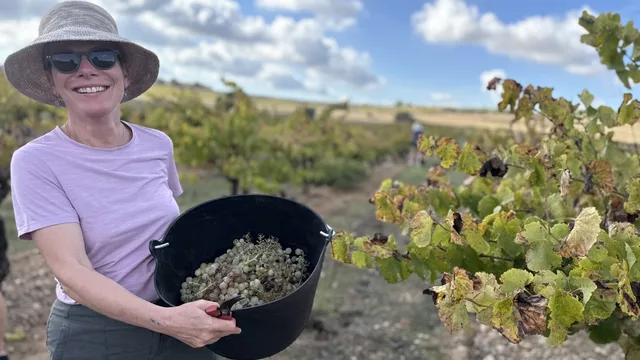
Just-picked Moscatell grapes in Vilabella.
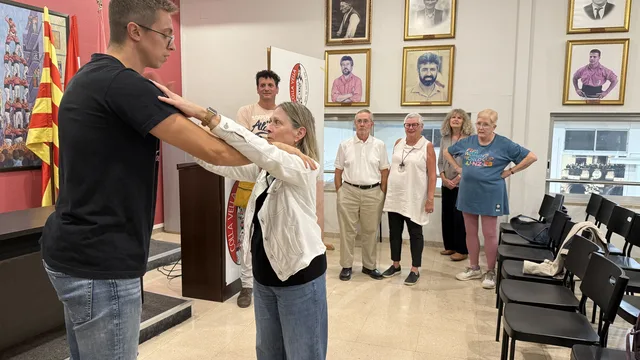
Learning the base of a human tower in Valls.
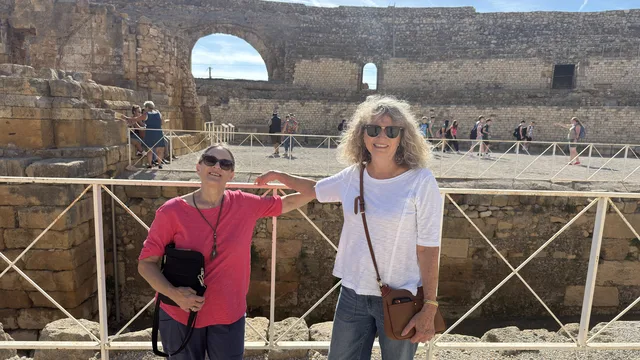
Big smiles at the Roman amphitheater in Tarragona.
Food Tour, Culinary Tour or Cooking Class in Spain?
People search for food tours in Spain, a Spanish food tour, Spanish food holidays or a cooking class. The words sound alike. The days are very different. This is a general picture, not a comment on any one company.
| A city food tour | A cooking class | Our culinary tour of Spain | |
|---|---|---|---|
| How long | A few hours | About 2 to 4 hours | 8 days, 7 nights |
| What you do | Walk from bar to bar and taste | Cook one meal, then eat it | Make wine, cook with a chef, plant oysters, build a human tower and eat with families |
| Who you meet | Your guide and a few bar owners | The teacher and other visitors | A winemaking family, a chef, oyster farmers and castellers, most days |
| The wine | A small glass at some stops | Sometimes a glass with the meal | Wine and vermouth with every lunch and dinner |
| Meals | Tastings that add up to one meal | The meal you cook | 21 meals: 7 breakfasts, 7 lunches, 7 dinners |
| Where you sleep | Not included | Not included | One family-run hotel by the sea, all week |
| Best for | A fun first night in a new city | A free afternoon in Barcelona | A week where food is how you meet people |
We love a good food tour. If you have one free night in Barcelona, go book one. You'll eat well and laugh a lot. But if you want to come home with friends in Spain, the food has to come with people, and that takes more than one evening.
Weighing a single class against a week? Read a Barcelona cooking class, or a week in Catalonia.
What You Cook and Eat in Catalonia
The big cooking class is on day 4, with chef Bet at Llèpol. Bet started out making preserves and take-away meals from local food, and Manye grew some of her vegetables. People loved her cooking so much that she opened a small bistrot. Now they drive a long way just to eat there.
With Bet you make cocas, a Catalan flatbread with toppings. Then fricandó: thin slices of beef cooked slowly with onions, tomatoes and white wine, finished with dried moixernons mushrooms. You also learn picada, the crushed almond, garlic and parsley paste that Catalan cooks use to thicken a stew. Then we sit down and eat every bite.
The rest of the food finds you in the places locals go:
- Fideuà, a seafood noodle dish, at a family Sunday lunch in the country
- Marta's entrepans at Bar del Mig, pressed sandwiches on warm bread from Les Pobles
- Tortilla, jamón and croquetas on a tapas crawl through Tarragona
- Giant oysters, mussels and paella on a boat in the Ebro Delta
- Vermouth hour, with olives, cured meats and cheese
Cyclists ride out to Bar del Mig on weekends just for those sandwiches. After one bite, you'll get it.
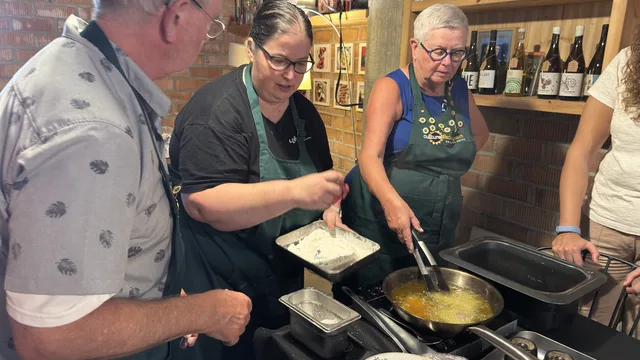
Making fricandó with chef Bet at Llèpol.
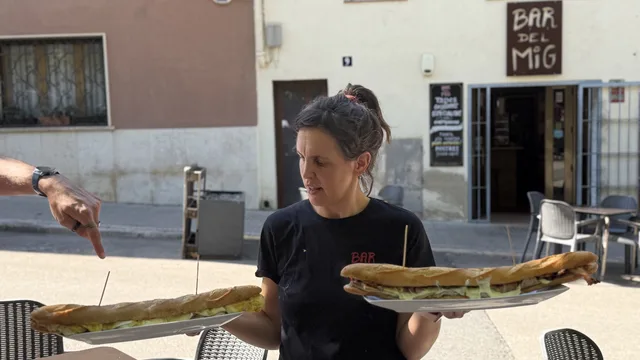
Long sandwiches at Bar del Mig.
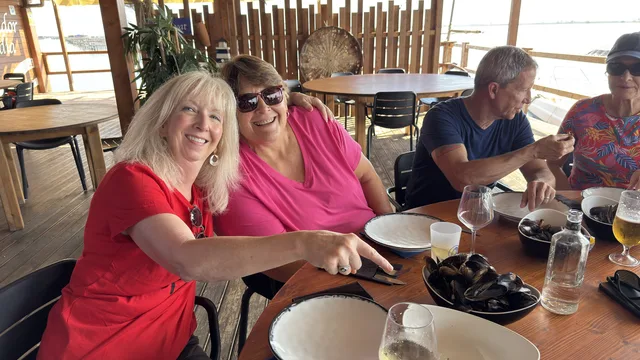
Mussels and laughs in the Ebro Delta.
The Wine: Mistela, Priorat and Our Own Barrel
Day 2 belongs to Manye's family. They're the 8th generation to make wine in Vilabella. On the September and October weeks you pick white Moscatell grapes in their vines. Then it's shoes off, feet washed, and into the wooden vat. Expect purple toes.
In May the grapes aren't ripe yet. So the May week spends day 2 in the cellar, making Mistela with the family. Mistela is a sweet wine: grape must mixed with alcohol, then left to age. Ours goes into the CDV barrel. Every group adds to it and tastes what the groups before them made. Then we carry bottles to Sunday lunch at an uncle's country home.
Day 7 is Priorat, one of the great wine regions of Spain. Its vines climb steep, terraced hills. In the little town of Porrera, winemakers keep their cellars in home garages. We split into small groups and visit three family cellars, then meet for a long lunch. These wines rarely leave the region.
Somewhere along the way you'll learn to drink from a porró, the glass pitcher with a long thin spout. Aim high. Laugh when you miss. And in the Ebro Delta, the oyster farmers pour a wine that aged under the water, right next to the shellfish.
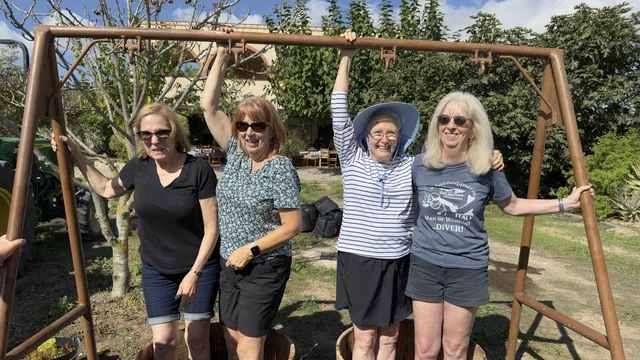
Stomping grapes, and laughing the whole time.
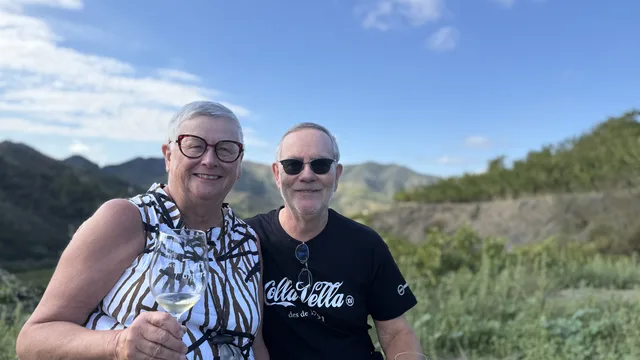
A glass of wine above the vines of Priorat.
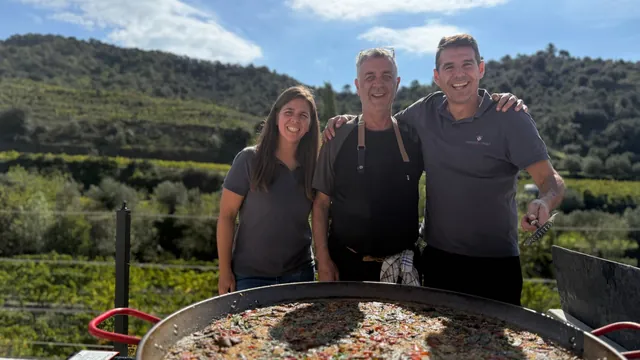
A big pan of paella at a vineyard lunch in Priorat.
A Day on Our Culinary Tour of Spain
Here's day 4, start to finish. The morning starts slow, Spanish style. Then we drive to Montferri to see a church built by Jujol, a student of Gaudí. It looks like it grew out of the hillside.
Fifteen minutes on, we stop at Bar del Mig in Santes Creus. Marta hands out her sandwiches and nobody talks for a while. A few steps away is the Monastery of Santes Creus, founded in the 12th century. Catalan kings are buried there. We get a private tour of the cloisters.
Next comes a quiet walk through the woods along the Gaià River. The path ends at Llèpol, where Bet has the aprons out. By the time it gets dark, the fricandó is bubbling, somebody has flour on their nose, and the wine is open. We eat what we made, at one long table.
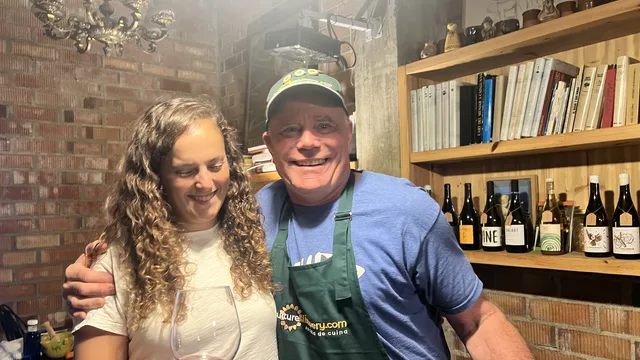
Big smiles at our cooking class at Llèpol.
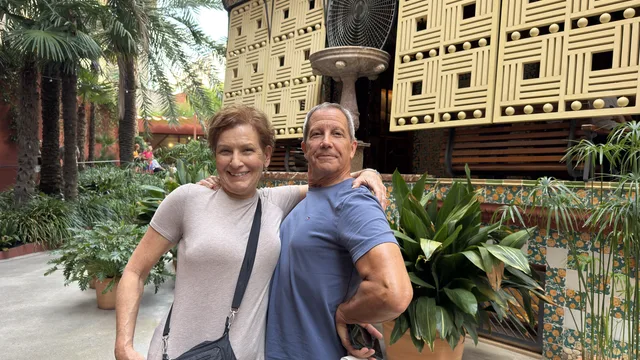
Day 3: the garden of Casa Vicens, Barcelona.
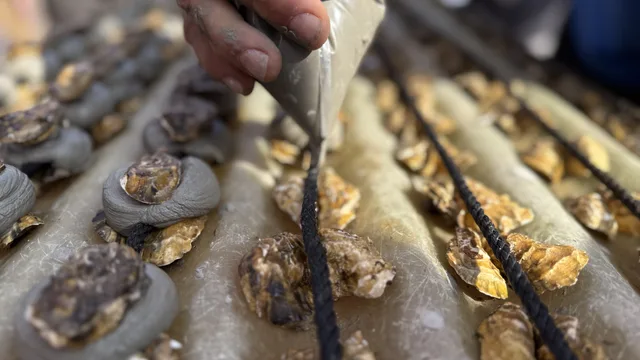
Day 5: planting our own oysters in the Ebro Delta.
The whole week at a glance
- Day 1Arrive, vermouth on the hotel terrace, welcome dinner in Tarragona's old town
- Day 2Vilabella: grapes or Mistela with Manye's family, Sunday lunch at his uncle's country home, a tapas crawl at night
- Day 3Barcelona by train with our friend Carlos: Casa Vicens, Gràcia, the Born and the Gothic Quarter
- Day 4Montferri, lunch at Bar del Mig, Santes Creus, a river walk, then cooking with Bet
- Day 5The Ebro Delta: plant oysters, paella on the boat, e-bikes through the rice fields, a sunset apericena
- Day 6Roman Tarragona, then human towers in Valls and dinner inside a 1918 distillery
- Day 7A wine crawl in Porrera, a cagatió workshop with Manye's father, and the farewell party at his fourth uncle's home
- Day 8Our transfer to Barcelona airport
Every stop, hour by hour, is on the full day-by-day plan.
How to Pick a Culinary Tour in Spain
Shopping for culinary tours of Spain? Ask these questions of any company before you book, us included. The answers tell you more than the photos do.
| Ask this | Why it matters | Our answer |
|---|---|---|
| How many guests, at most? | A family kitchen can't hold a coach. | 16 at most |
| How many hotels? | Packing every other day eats your week. | One, for all 7 nights |
| Which meals are included? Is wine? | Meals and drinks add up fast. | 21 meals, wine and vermouth at lunch and dinner |
| Who cooks with you? | A local chef with a story beats a demo kitchen. | Chef Bet, in her own restaurant |
| Do you meet the winemakers? | A tasting room is not a cellar. | Manye's family, plus three family cellars in Porrera |
| Are tips and entry fees in the price? | Small extras can surprise you at the end. | Every entry fee, and every tip outside our team |
| Who is with you each day? | A driver is not a host. | Manye and Marta, all week |
| How much walking? | Cobblestones and hills are real. | About 11 miles over the week, plus an hour on an e-bike |
One more test. Ask what happens if only a few people book. We have not canceled a departure in 20 years. Not even when only 2 guests had booked.
Still choosing a country? See our culinary tours of Europe, or our Italy cooking vacations and Portugal food and wine week.
Our Culinary Tour of Spain for 2027
One trip, done with care. In 2027 it runs in May, September and October. The price comes live from our booking calendar.

The people behind Culture Discovery
Michael & Paola Kovnick founded Culture Discovery Vacations in 2006. Paola was born in Soriano nel Cimino, the village in central Italy where many of our weeks are based. Michael first came to Italy in 1983. They run the company with their partners Daniele Pintaudi, our Global COO, whose career runs from Michelin-starred kitchens to a Relais & Châteaux property, and Marta Marques, who founded her own tour company and merged it with ours.
On the trip itself you are with our local hosts, home cooks and family winemakers: the people who make the week what it is.
2026 Travel Weekly Magellan Gold Award: Best Tour Operator, Overall · 2025 Magellan Gold Award for Best Service · Tripadvisor Hall of Fame
What's Included on Our Culinary Spain Week
Our week in Catalonia comes in one price. You book once and then put your wallet away. Here's the list.
Included
- 7 nights at Hotel Núria in Tarragona, with breakfast every day
- 21 meals, with wine and vermouth at every lunch and dinner
- The cooking class with chef Bet, and everything we cook
- Mistela making with Manye's family, with grape picking on the fall weeks
- A full day in Barcelona with Casa Vicens, and the train there and back
- The oyster farm and e-bikes in the Ebro Delta, the human tower workshop and the Priorat wine crawl
- Every entry fee, tour and tasting, and all transport during the week
- Barcelona airport transfers on our schedule
- Every tip outside our team
Not included
- Your flights
- Travel insurance
- Your own shopping, and drinks between meals
- A tip for your hosts, only if you want to give one
From $6,095 per person, two people sharing. Past guests get an alumni discount. Every room option is on the dates and prices page.
Add up a hotel, 21 meals with wine, a train to Barcelona, a boat in the delta, a cooking class, three cellars and a chef, and a cheaper trip stops looking cheap. The part nobody can sell you is the family. We earn our price with them. See the numbers in what a trip to Spain costs and what the word should mean in all-inclusive Spain trips.
What our guests say about Catalonia
5.0 out of 5 from 2 guest reviews of these trips
Travel with family!
“Barcelona was my 5th solo trip with CDV. As a solo traveler you're always wondering what if I'm the only solo person, what if it's all couples ...”
Mary Elizabeth B., Wilmington, NC
· October 2026
Barcelona & Catalonia: Cooking, Wine & Catalan Traditions: all reviews
Read every review of our Catalonia trip.
When to Go on a Culinary Trip to Spain
The best months for culinary Spain are in spring and fall. Summer is hot and busy, and in August many locals close up shop and leave town. In 2027, our Catalonia week runs in May, September and October.
Come in the fall for the grape harvest in Vilabella, purple feet and all. Come in May for green vines, Mistela in the cellar and a softer sun.
Our month-by-month guide covers the best time to visit Spain. Want to add Lisbon or Porto? Here's how to do Spain and Portugal together.
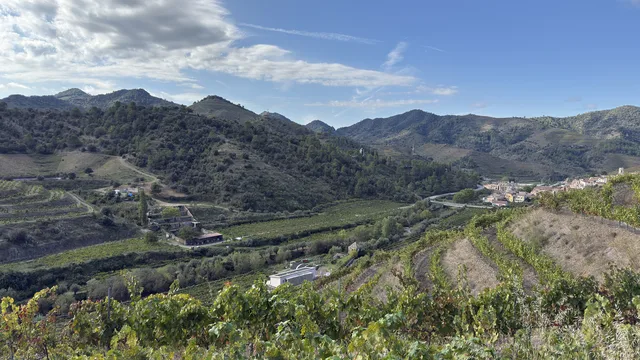
Terraced vines in a green Priorat valley.
Culinary Spain Questions, Answered
What is the best culinary tour of Spain?
The best one is the one that puts you at a family's table, not only in a tasting line. Look for a small group, one hotel, meals and wine included, and real time with the people who grow and cook the food. Our pick for culinary Spain is our own week in Catalonia: 8 days, 16 guests at most, with an 8th-generation winemaking family, a cooking class with chef Bet and a wine crawl in Priorat.
Are food tours in Spain worth it?
Yes, for what they are. A good city food tour is a fun few hours, and it is a smart first night in Barcelona. If you want to know the people behind the food, give it a week. On our culinary tour of Spain you make wine, cook, plant oysters and eat Sunday lunch with a Catalan family.
What food is Catalonia known for?
Seafood and rice from the coast, slow stews from the hills and a lot of wine. On our week you eat fideuà, a seafood noodle dish, at a family Sunday lunch. You cook cocas and fricandó with chef Bet. You eat oysters, mussels and paella in the Ebro Delta, pressed entrepans at Bar del Mig, and tortilla, jamón and croquetas on a tapas crawl.
How much is a culinary trip to Spain?
Our 2027 Catalonia week starts from $6,095 per person, two people sharing. That covers 7 nights in Tarragona, 21 meals with wine and vermouth, the cooking class, every outing, entry fee and tasting, the train to Barcelona and airport transfers on our schedule. Flights and travel insurance are extra. A single city food tour costs far less, and it covers a few hours.
What is the difference between a food tour and a culinary tour in Spain?
A food tour is a few hours of walking and tasting in one city. A culinary tour is a whole trip built around food. On ours you sleep in one family-run hotel for 7 nights, eat 21 meals, cook with a local chef and spend most days with the families who make the wine and the food.
How many people are on your culinary tours of Spain?
Never more than 16 guests. That is small enough for a family to welcome all of us into their cellar and their home. By day two, everyone knows each other by name.
Do we stay in Barcelona?
No. Home all week is Hotel Núria, a family-run hotel near Arrabassada Beach in Tarragona. Barcelona is a full day trip by train on day 3, with our friend Carlos. One hotel means you unpack once.
Will we pick grapes?
On the September and October weeks, yes. You pick Moscatell grapes in Vilabella and stomp them barefoot. In May the grapes are not ripe yet, so we make Mistela with the family in the cellar instead.
Do I need to be a good cook or know about wine?
Not at all. Chef Bet teaches every step, and the family pours and explains as you go. Plenty of our guests have never cooked a Catalan dish or heard of Mistela before day 2.
Is the trip good for solo travelers?
Yes. Many of our guests come alone and leave with friends. The group eats together every day, so you never sit by yourself.
Plan Your Culinary Trip to Spain
We run the same kind of week in Italy too. Start with our Italy culinary vacations or the food tours of Italy. Want a week just for your own group? Ask about our custom tours.
Save a seat at the family table
Pick your week and we'll pour you a glass of Mistela when you get there. Questions first? Just ask. A real person on our team will write back.
See dates and prices Talk to us